 Yintai Eyewear
Executive Summary: Strategic Dynamics of Acetate Eyewear Manufacturing
An authoritative analysis of cellulose acetate material engineering, global B2B procurement benchmarks, and manufacturing optimization strategies.
In the rapidly evolving global optical market, sourcing high-grade cellulose acetate sunglasses and optical frames represents a critical strategic decision for luxury fashion houses, retail optical chains, and digital direct-to-consumer (DTC) brands. Cellulose acetate—a semi-synthetic polymer derived from renewable natural cotton linters and wood pulp—remains the gold standard for high-end eyewear. Unlike standard injection-molded plastics such as polycarbonate (PC) or TR90, premium acetate offers unparalleled tactile warmth, deep color saturation, hypoallergenic properties, and structural memory allowing precision cold-fitting by professional opticians.
Navigating the commercial landscape for a certified wholesale sunglasses acetate supplier requires an in-depth understanding of material chemistry, thermal stability, multi-axis CNC milling, and complex manual polishing cycles. Modern eyewear procurement is no longer merely about unit price; it centers on total supply chain resilience, information transparency, strict adherence to international quality standards (ISO 9001, CE, RoHS), and the capacity to innovate via bio-degradable eco-acetates and hybrid material fusions.
Information Gain Benchmark: Polymer Chemistry vs. Performance
Cellulose Acetate (CA) is produced through the esterification of purified cellulose with acetic anhydride in the presence of a sulfuric acid catalyst. The resulting polymer flakes are combined with plasticizers (such as DEP or eco-friendly non-phthalate bio-plasticizers) and organic pigments before being kneaded, rolled, and block-pressed into cured sheets. This chemical structure delivers distinct physical mechanical benefits over alternative thermoplastic frame materials:
| Material Metric / Attribute | Premium Cellulose Acetate (CA) | Injection Molded TR90 (Polyamide) | Polycarbonate (PC) |
|---|---|---|---|
| Raw Material Source | Natural Wood Pulp / Cotton Linters (Renewable) | Petroleum-Based Synthetic Polymer | Petroleum-Based Synthetic Thermoplastic |
| Color Depth & Patterns | 3D Layered Laminates, Custom Tortoiseshell, Rich Depth | Surface Paint Spraying or Uniform Monocolor | Surface Coating (Prone to Peeling & Scratching) |
| Adjustability & Optician Workability | Excellent (Thermo-pliable under mild heat for custom fit) | Low (High shape memory resists re-shaping) | Zero (Heat application causes stress fractures) |
| Tactile Comfort & Skin Safety | Hypoallergenic, Warm, Organic Surface Feel | Lightweight but Synthetic Plastic Feel | Standard Plastic Feel, Potential Allergenic Traces |
| Environmental Impact | Bio-Acetate options are 100% Biodegradable (ISO 14855) | Non-Biodegradable Synthetic Waste | Non-Biodegradable Recycled Polymer |
Global Commercial & Industrial Landscape: Sourcing Hub Comparison
Mapping the worldwide centers of optical manufacturing excellence to determine optimal B2B procurement positioning.
Belluno Cluster (Italy)
Historically recognized for artisanal design legacy and luxury brand consolidation. While offering prestige value, European manufacturing exhibits extremely high unit costs, rigid Minimum Order Quantities (MOQs exceeding 3,000 units per colorway), and extended production lead times often ranging from 180 to 240 days.
Sabae Cluster (Fukui, Japan)
World-renowned for ultra-premium titanium crafting and exquisite micro-details. However, Japanese supply chains face severe capacity bottlenecks, aging workforce demographics, and restrictive export customization frameworks that limit rapid global scaling for mid-to-large tier optical brands.
Shenzhen Cluster (Guangdong, China)
The global leader in high-end optical technology, combining European aesthetic standards with advanced Industry 4.0 automation. The Shenzhen ecosystem provides complete vertical integration—from raw material extrusion and 5-axis CNC carving to precision electroplating—offering unmatched turnarounds, agile MOQs, and superior cost-to-quality ratios.
China Industry 4.0: Yintai Eyewear Supply Chain Resilience & Manufacturing Infrastructure
Over 15 years of dedicated engineering excellence, integrating precision automated CNC machining with rigorous multi-tier quality control.
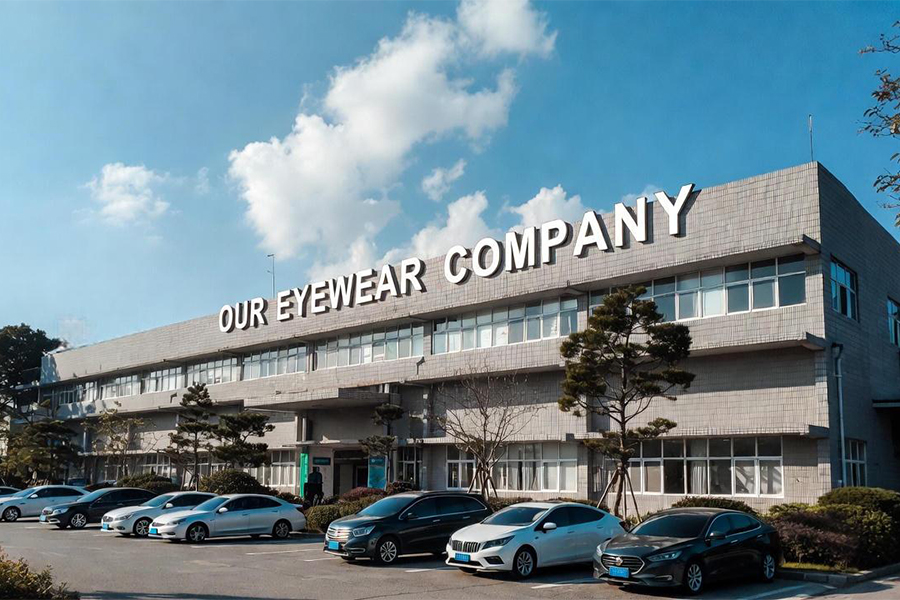
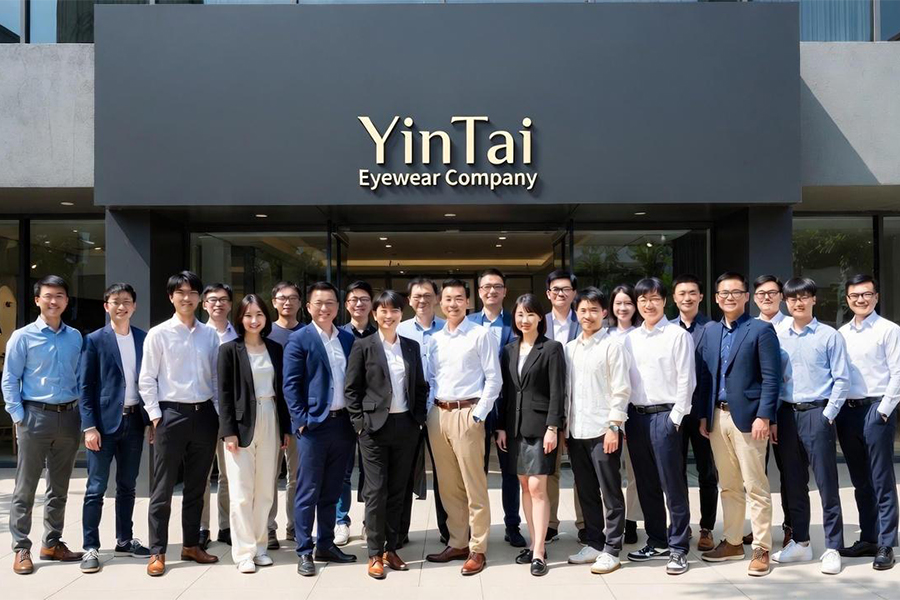
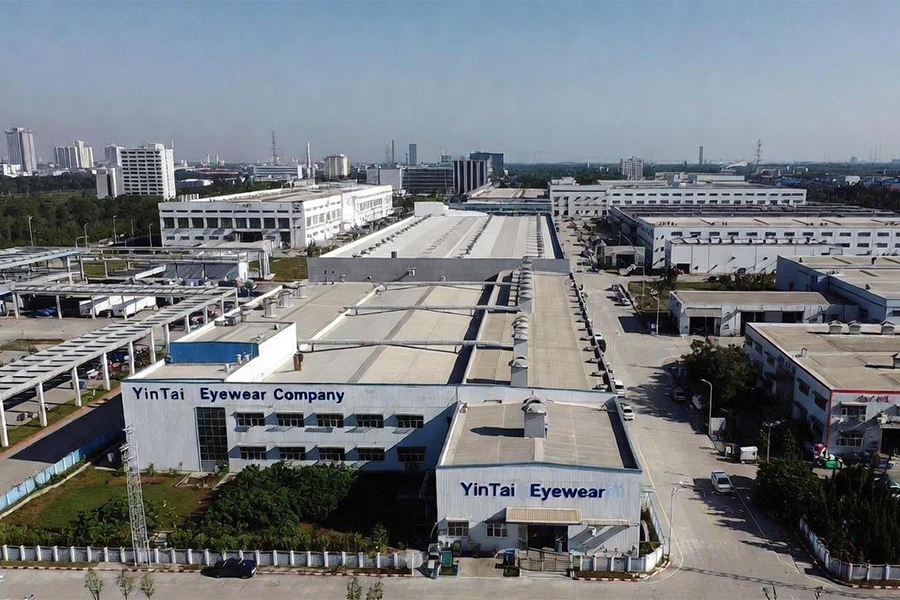
Yintai Eyewear is a premier manufacturer based in Shenzhen, Guangdong Province, China, specializing in high-grade eyewear production. After 15 years of dedicated development, Yintai Eyewear has evolved into a modern enterprise integrating technological R&D, precision manufacturing, and global sales networks. Operating out of a state-of-the-art industrial park at the Fuji Land Building, Yintai Eyewear provides full vertical integration for international eyewear brands seeking a dependable wholesale sunglasses acetate supplier.
Large-scale Production Base
Located in the industrial park at Fuji Land Building, equipped with: fully automated production lines, multi-axis CNC machining centers, and Class 10,000 cleanrooms, ensuring both stable production capacity and consistent high quality across large volume batches.
Elite R&D & Engineering
Supported by over 200 dedicated employees, including a 10-member elite R&D and technical engineering team that continuously drives structural product innovation, ergonomic fitting optimization, and advanced process refinement.
Vertical Integration Capabilities
From raw material procurement and custom mold development to CNC carving, hinge insertion, hand polishing, and final packaging—vertical integration translates to controlled costs, accelerated delivery cycles, and zero quality compromise.
Comprehensive Compliance & Quality Governance
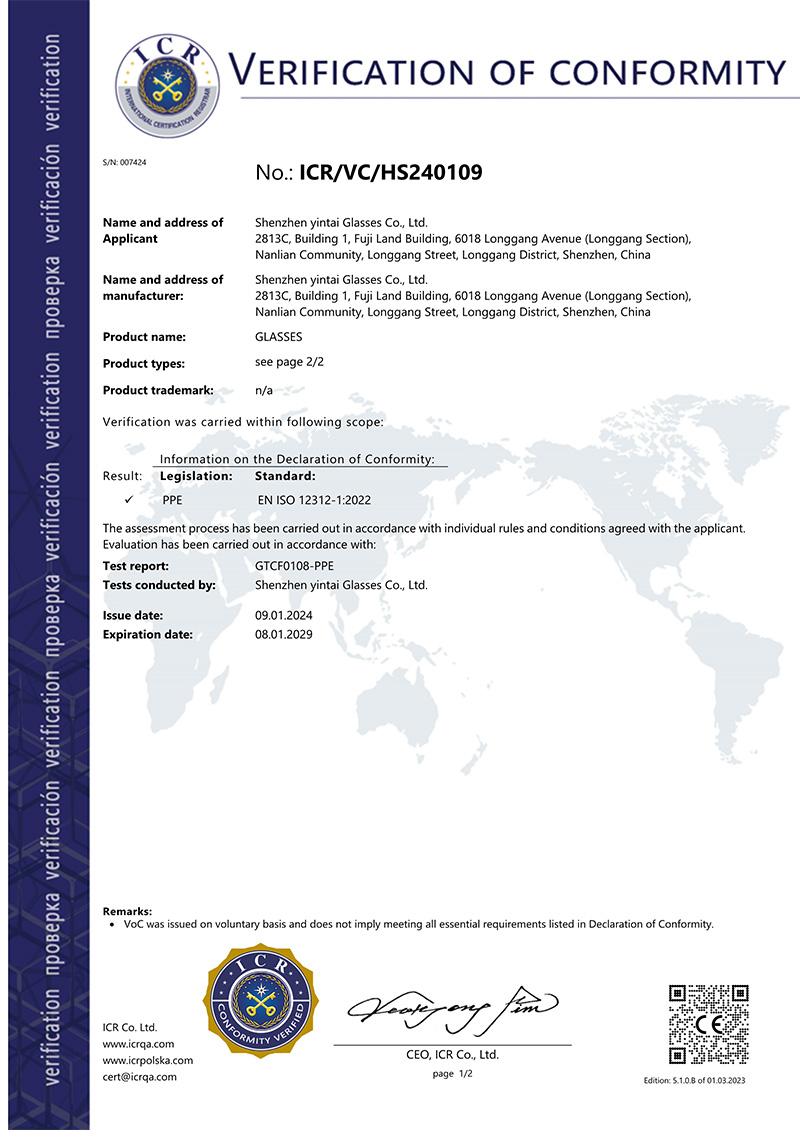
- Complete International Certifications: Fully compliant with global standard certifications including ISO9001 quality management, CE European conformity marking, and RoHS material environmental directives.
- Strict End-to-End Quality Control: Implementing a total quality management system across IQC (Incoming Quality Control of raw acetate and hinges), IPQC (In-Process Quality Control during CNC milling and tumble polishing), and FQC (Final Quality Control prior to dispatch), achieving an operational qualification rate of 99%.
- 24-Hour Rapid Professional Response: Backed by a specialized international B2B sales team providing rapid technical consultation, transparent quotations, and comprehensive project updates within 24 hours.
- Turnkey OEM/ODM One-Stop Solutions: End-to-end management spanning rapid 3D prototyping, custom acetate sheet laminating, logo laser engraving, custom hardware development, and door-to-door global logistics.
Manufacturing Plant & Industrial Infrastructure
Technical Deep Dive: The 5-Stage Acetate Frame Manufacturing Value Chain
From raw cellulose curing to hand-finished micro-polishing: engineering perfection into every frame.
Raw Material Aging & Oven Curing
Raw acetate extruded sheets undergo controlled thermal aging in digital drying kilns for up to 60 days. This essential step evacuates residual solvents, preventing internal material stress and guaranteeing that finished frames maintain dimensional stability without warping under global climate variances.
5-Axis CNC Precision Carving
Cured acetate plates are fed into high-precision 5-axis computer numerical control (CNC) milling centers. Front rims, lens grooves, bridge bevels, and temple contours are sculpted with micro-level tolerances (< 0.03mm), ensuring exact optical lens retention and balanced weight distribution.
High-Frequency Wire Core & Hinge Embedding
Stainless steel or custom-plated titanium wire cores are pneumatically inserted into heated acetate temple arms using high-frequency thermal induction. Premium German-engineered OBE or Italian Visottica multi-barrel hinges are hot-pinned or riveted directly into the frame structure for lifelong hinge smooth action.
72-Hour Multi-Stage Organic Tumbling
Milled frame components undergo 72 hours of continuous rotational tumbling inside hardwood barrels filled with graded birch chips, walnut shells, and natural polishing pastes. This multi-phase abrasive process eliminates tool marks and rounds geometric edges naturally.
Artisanal Hand Diamond Polishing
Master craftsmen hand-buff every frame on high-speed cotton wheels coated with micro-fine rouge compounds. This manual skill restores deep optical clarity, unearths rich 3D laminate depth, and yields a soft-touch mirror luster unattainable by automated spray coatings.
Optometric Alignment & Final Inspection
Frames are fitted with custom polarized TAC, CR39, or Nylon lenses featuring internal anti-reflective (AR) coatings. Every finished pair passes 4-point temple planar alignment, bridge symmetry validation, and tension torque testing under 100% strict FQC audit protocols.
Localized Application Scenarios & Global Buyer Profiles
Tailored OEM/ODM manufacturing frameworks engineered to meet distinct commercial models across North America, Europe, and Asia-Pacific.
Luxury Fashion Houses & Designer Boutiques
High-end fashion labels require bespoke acetate laminates, custom color matching (Pantone exact matching), 3D metallic wire-core inserts, and signature temple rivets. Yintai Eyewear provides low-volume prototyping, proprietary mold protection, and specialized artisanal hand-finishing for luxury runway lines.
Optical Retail Chains & Regional Wholesalers
Commercial distributors demand robust SKU diversification, rapid replenishment, and strict compliance with medical optical frame tolerances (ISO 12870). Our facility supports high-capacity production (20,000+ pcs/month) with standardized temple sizing and universal/Asian ergonomic nose pad configurations.
Direct-to-Consumer (DTC) E-Commerce Brands
Modern digital eyewear brands prioritize rapid market testing, low initial MOQs, custom drop-ship ready packaging, and eco-friendly narratives. We provide turnkey OEM solutions including eco-bio-acetate collections, custom logo laser etching, and branded hard cases.
Industrial & Prescription Safety / Hybrid Frame Buyers
Specialized enterprise buyers requiring heavy-duty combination frames featuring acetate fronts anchored to ultra-light pure titanium temples or hand-carved industrial metal cores for dual prescription optical and sun protective functionality.
2025+ Macro Trends in Acetate Eyewear Engineering
Forward-looking innovations shaping material selection, sustainable sourcing, and smart manufacturing.
1. The Bio-Acetate Revolution
Environmental regulations and conscious consumerism are driving massive shifts toward bio-based cellulose acetate. Formulated using plasticizers of vegetable origin (free from diethyl phthalate), bio-acetate yields 100% biodegradable sheets under industrial composting conditions (ISO 14855) while retaining equal mechanical strength and color clarity.
2. High-Density (HD) Slim Acetate
Advances in raw polymer compaction allow for High-Density Acetate sheets that deliver structural rigidity at ultra-thin cross-sections (down to 2.8mm). This breakthrough enables ultra-lightweight classic rectangular and round optical frames with vintage aesthetics without the heavy physical weight of traditional 6.0mm acetate.
3. Pure Titanium & Acetate Fusion
Hybrid material construction combining hypoallergenic Japanese Beta-Titanium temples with hand-sculpted acetate rim rims represents the fastest-growing segment in executive eyewear. This hybrid design offers extreme flexural resilience, zero corrosion, and optimal weight balance for all-day wearing comfort.
Frequently Asked Questions (FAQ) & Sourcing Technical Guidance
Expert answers to common procurement, manufacturing, quality control, and OEM logistical queries.