In the modern high-end eyewear manufacturing industry, the temple is no longer merely a structural side-arm designed to hold glasses in place. It represents the crucial nexus of ergonomic comfort, structural memory, tensile flexibility, skin-contact biocompatibility, and aesthetic refinement. As eyewear brands across North America, Europe, and Asia shift towards ultra-lightweight, hypoallergenic, and indestructible luxury frames, searching for specialized, world-class OEM titanium temples factories & factory networks has become a strategic priority for global B2B procurement directors, brand owners, and optical engineering teams.
Titanium (element symbol Ti, atomic number 22) boasts the highest strength-to-density ratio of any metallic element on the periodic table. When processed into eyewear temples through advanced metallurgy, cold forging, CNC wire milling, and vacuum brazing, it yields components that weigh up to 45% less than traditional nickel-silver or monel alloys, while delivering exceptional resistance to sweat corrosion, stress fatigue, and permanent deformation.
Understanding the material grade is the foundational step in OEM titanium temple manufacturing. Specialized OEM factories utilize three distinct primary metallurgical formulations, each tuned for specific mechanical behaviors and temple flex profiles:
| Titanium Material Grade | Chemical Composition | Tensile Strength (MPa) | Flexural Elasticity | Primary OEM Application |
|---|---|---|---|---|
| Commercially Pure (CP-Ti / Grade 4) | Ti > 99.2%, Fe < 0.50%, O < 0.40% | 550 - 750 MPa | Standard Rigidity (Low Spring Back) | Rigid Temples, Luxury Cast Fronts, Hinge Blocks |
| Beta-Titanium (Beta-Ti / Ti-15V-3Cr-3Sn-3Al) | Ti-Base + 15% V, 3% Cr, 3% Sn, 3% Al | 980 - 1250 MPa | Ultra-High Spring Memory | Slim Super-Elastic Temples, Flexible Rimless Arms |
| Nickel-Titanium Memory Alloy (Nitinol) | 55% Ni - 45% Ti Superelastic Alloy | 850 - 1100 MPa | Shape Memory (360° Deformation) | Extreme Sports Temples, Kid-Proof Eyewear Arms |
| Alpha-Beta Titanium (Ti-6Al-4V / Grade 5) | Ti-Base + 6% Al, 4% V | 900 - 1150 MPa | High Structural Stiffness | Heavy-Duty Tactical Frame Joints & Modular Temples |
For premier OEM optical brands, Beta-Titanium (Beta-Ti) stands as the ultimate choice for temple fabrication. Its body-centered cubic (BCC) phase structure provides superior flexural modulus, enabling temple arms to be milled down to ultra-fine diameters (as thin as 0.7mm) while maintaining unbreakable spring memory and zero permanent bending under daily stress tests.
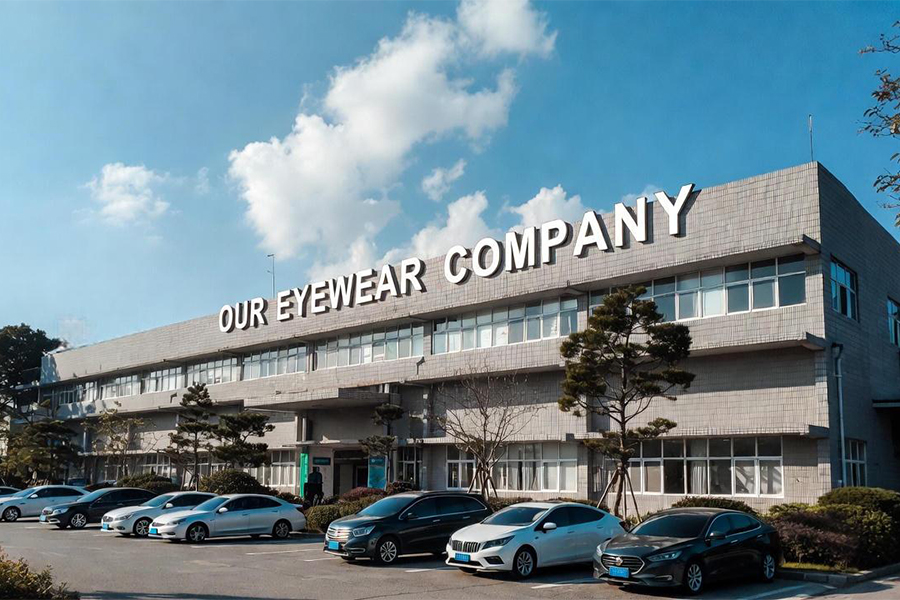
Located in the industrial park at Fuji Land Building, equipped with: fully automated production lines, CNC machining centers, Class 10,000 cleanrooms, and more, ensuring both stable production capacity and consistent quality.
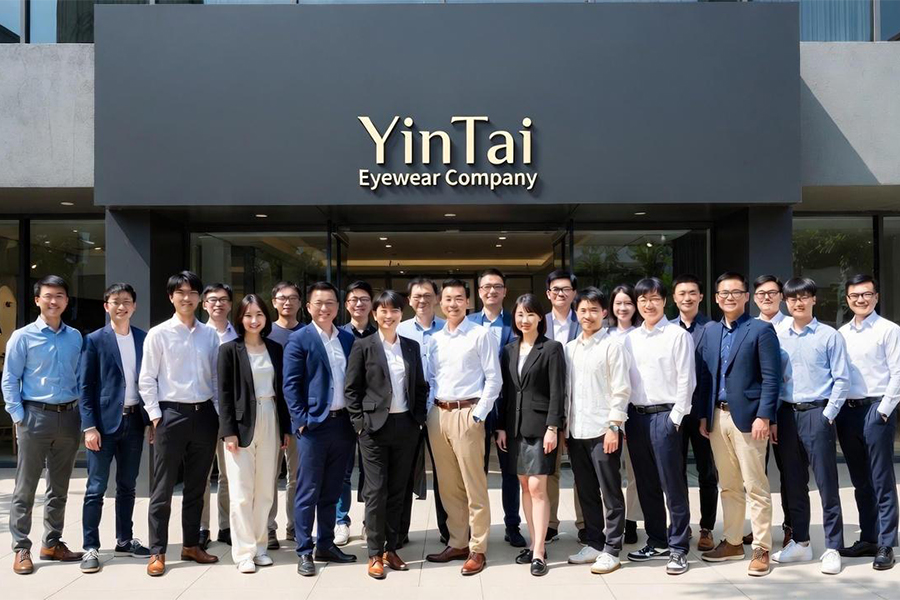
We have over 200 dedicated employees, including a 10-member elite R&D and technical team that continuously drives product innovation and process optimization.
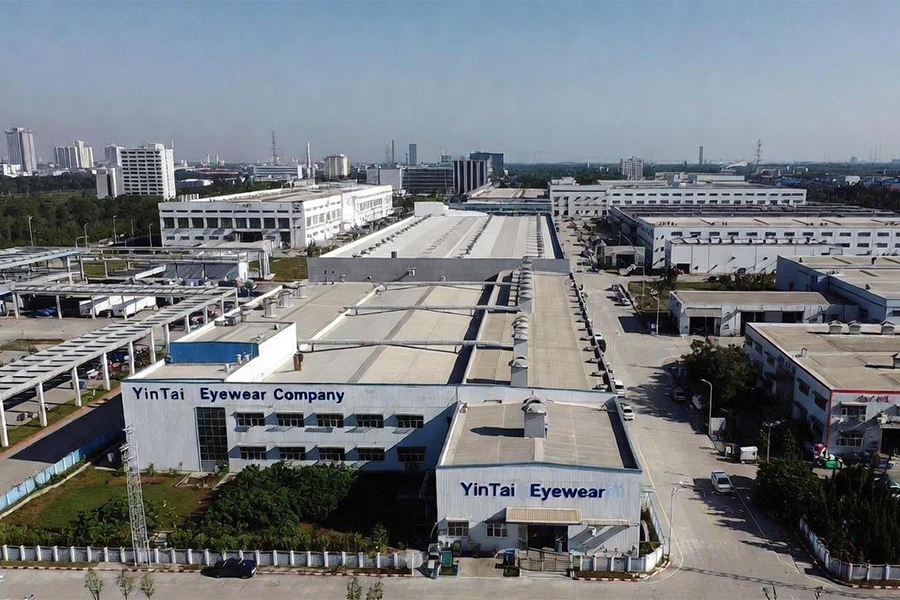
From raw material procurement and mold development to finished product assembly, we have achieved vertical integration across core production processes. This translates to more controllable costs, faster delivery cycles, and more consistent product quality.
★ Factory Area: Over 5,000 square meters of modern factory space.
★ Employee Scale: Over 200+ full-time employees.
★ Monthly Capacity: Up to 20,000 +, supporting large-scale order demands.
★ Complete Certifications: Fully compliant with international certifications including ISO9001, CE, RoHS, and others.
★ Strict Quality Control: Implementing a comprehensive quality management system from IQC, IPQC to FQC, with a product qualification rate reaching 99%.
★ Industry Experience: With 15 years of deep industry expertise, possessing profound global market understanding.
★ Prompt Response: Dedicated overseas sales team responding to inquiries within 24 hours with end-to-end prototyping and delivery.
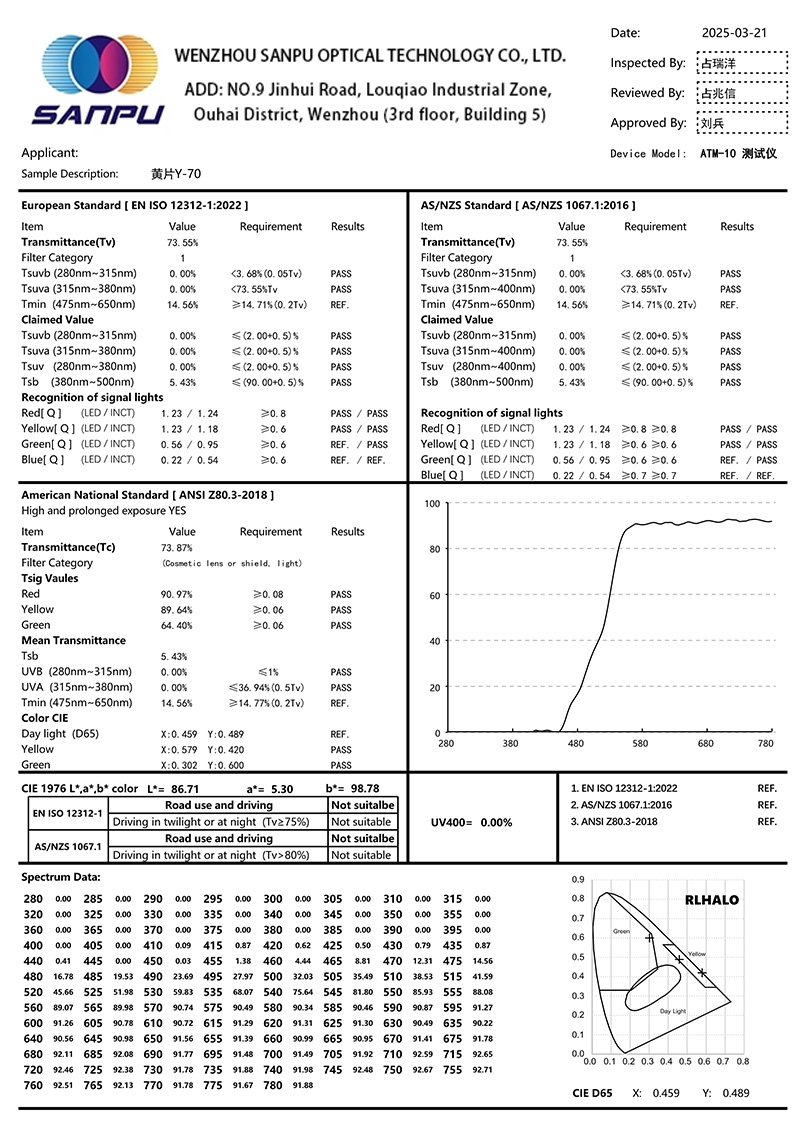
Precision manufacturing of high-performance Beta-Titanium and Pure Titanium temples requires extreme thermal and mechanical control due to titanium's unique affinity for oxygen and hydrogen at elevated temperatures. Our factory employs a rigorous 6-stage engineering roadmap:
High-purity Beta-Titanium wire stock undergoes cold swaging and multi-axis CNC profile milling to establish 3D ergonomic tapers, graduating from 2.5mm near the hinge box to 0.8mm along the elastic flex zone.
To join titanium hinges to the flexible shaft without embrittlement, welding occurs inside argon gas shielded or vacuum chambers using silver-palladium titanium brazing alloys to eliminate oxidation joints.
Temples are finished in IP (Ion Plating) vacuum coaters using TiN, TiCN, and ZrN sputtering target materials to achieve scratch-resistant, hypoallergenic coatings in Rose Gold, Matte Black, Gunmetal, and Chrome.
Custom OEM titanium temples manufactured by specialized Chinese production bases serve a diverse range of global consumer and industrial sectors:
Over the past two decades, Shenzhen, Guangdong Province has established itself as the world's epicenter for high-end optical frame manufacturing and micro-metallurgical engineering. Choosing an OEM titanium temples factory located in Shenzhen offers unmatched structural advantages for international buyers:
Within a 30-minute radius, our facility accesses raw titanium ingot refineries, custom wire-drawing mills, specialized micro-hinge tooling makers, and eco-friendly electroplating industrial parks, cutting material transit friction to zero.
While European factories typically require 6 to 8 weeks for custom temple mold fabrication, Yintai Eyewear’s in-house 5-axis CNC shop produces functional 3D titanium temple prototypes within 7 to 10 working days.
With high-speed automated titanium stamping lines and vertically integrated processes, yield loss is kept below 0.2%, allowing us to deliver premium European-tier quality at highly competitive factory-direct wholesale pricing.
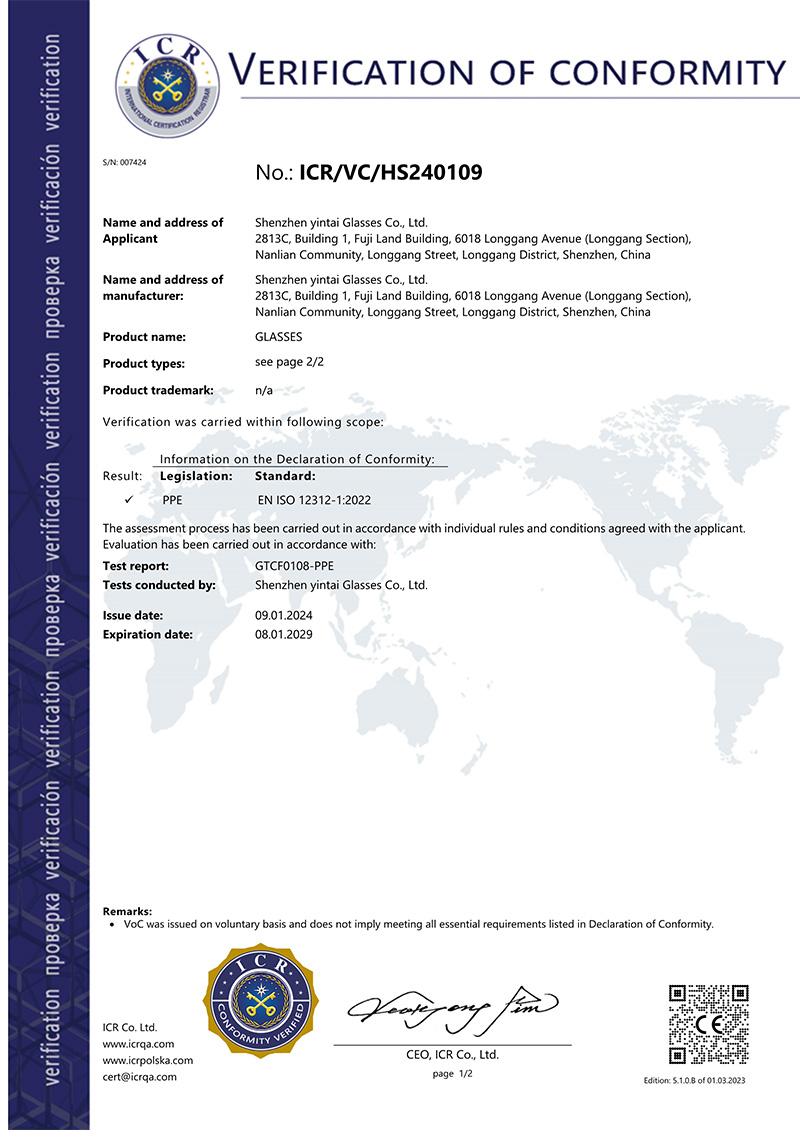
To guarantee seamless market entry into North America, Europe, Japan, and Australia, all custom titanium temple batches produced at Yintai Eyewear undergo rigorous physical and chemical quality control inspections across five dedicated testing stations:
| Test Protocol | International Standard | Test Parameters & Duration | Quality Acceptance Criteria |
|---|---|---|---|
| Hinge Flexing Endurance Test | ISO 12870 / EN ISO 12312-1 | 30,000 Continuous Open/Close Cycles at 0.5Hz | Zero joint looseness, hinge torque retention > 85% |
| Sweat & Corrosion Resistance | ISO 12870 Section 4.9 | Artificial Sweat Immersion (pH 4.7) at 55°C for 24 Hours | No pitting, discoloration, or PVD plating peeling |
| Nickel Release Spectroscopy | EN 1811 / REACH Annex XVII | Atomic Absorption Spectrometry after 7-day immersion | < 0.5 µg/cm²/week (100% Nickel-Free) |
| Temple Elastic Bending Test | Internal Quality Standard (IQC-Ti) | 90-Degree Lateral Flexing for 5,000 repetitions | Zero permanent bend residual deviation (< 0.1mm) |
 Yintai Eyewear