Explore our premium custom engineered sunglasses and optical frames built to high UV400 and CE standards.
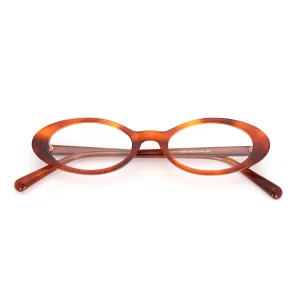
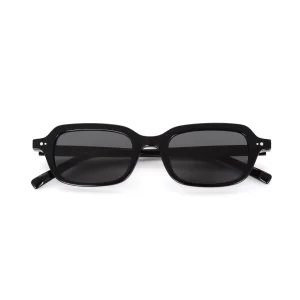
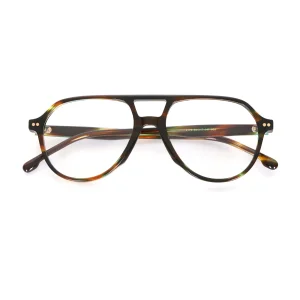
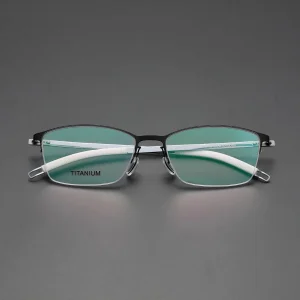
In the contemporary eyewear industry, the paradigm of sun protection has transitioned from mere aesthetic fashion accessories to high-performance optical gear. As global consumers become increasingly aware of ocular health, solar radiation hazards, and High-Energy Visible (HEV) blue light, global brands face immense pressure to deliver sunglasses that combine rigorous UV protection with bespoke design innovation. This technical whitepaper analyzes the essential engineering frameworks, manufacturing methodologies, and supply chain strategies required to deploy commercial-grade ODM UV protection sunglasses globally.
Core Information Gain Key: Effective UV protection requires absolute spectral attenuation between 280nm and 400nm (UV400 certification). Modern Original Design Manufacturers (ODMs) must integrate chemical molecular UV absorbers into lens substrates while utilizing 5-axis CNC frame milling to eliminate optical chromatic aberrations and frame distortion.
Selecting an authoritative ODM UV Protection Sunglasses Manufacturer is no longer just about sourcing lower unit costs; it is an executive decision affecting brand equity, regulatory compliance (such as EU MDR and US FDA requirements), and time-to-market speed. As a recognized leader based in Shenzhen's optical cluster, Yintai Eyewear has pioneered high-density cellulose acetate, pure titanium, and advanced polyamide (nylon) lens integration for over 15 years.
Quantifiable performance metrics defining our high-capacity OEM & ODM manufacturing infrastructure.
True UV protection requires precise engineering at the molecular level. UV radiation is divided into UVA (315–400 nm) and UVB (280–315 nm). Exposure to these wavelengths without proper filtering can lead to photokeratitis, pterygium, and accelerated cataract formation. Superior ODM sunglasses manufacturers employ state-of-the-art substrate physics to achieve complete spectrum absorption.
The choice of lens substrate dictates optical clarity, impact resistance, and weight. The table below details the performance parameters across various optical materials engineered at our production base:
| Substrate Material | Abbe Value (Clarity) | Refractive Index | Impact Resistance | UV400 Cutoff Method |
|---|---|---|---|---|
| Polyamide (Nylon) | 52 (Superior) | 1.53 | Extreme (ANSI Z87.1 High Pass) | In-Monomer Absorber Compound |
| CR-39 (Allyl Diglycol) | 58 (Ultra-High) | 1.50 | Standard Optical Grade | Dip-Coating & Substrate Matrix |
| TAC Polarized (Triacetate) | 38 (Good) | 1.49 | Flexible Multi-layer Laminate | PVA Polarizing Inner Layer |
| Polycarbonate (PC) | 30 (Moderate) | 1.59 | Military Grade Impact | In-Resin Organic UV Blocker |
In addition to UV spectrum filtering, enterprise ODM manufacturing requires physical vapor deposition (PVD) to apply specialized coatings inside Class 10,000 cleanrooms:
Discover how Yintai Eyewear integrates technological R&D, automated CNC milling, and vertical supply control to deliver unparalleled ODM capabilities.
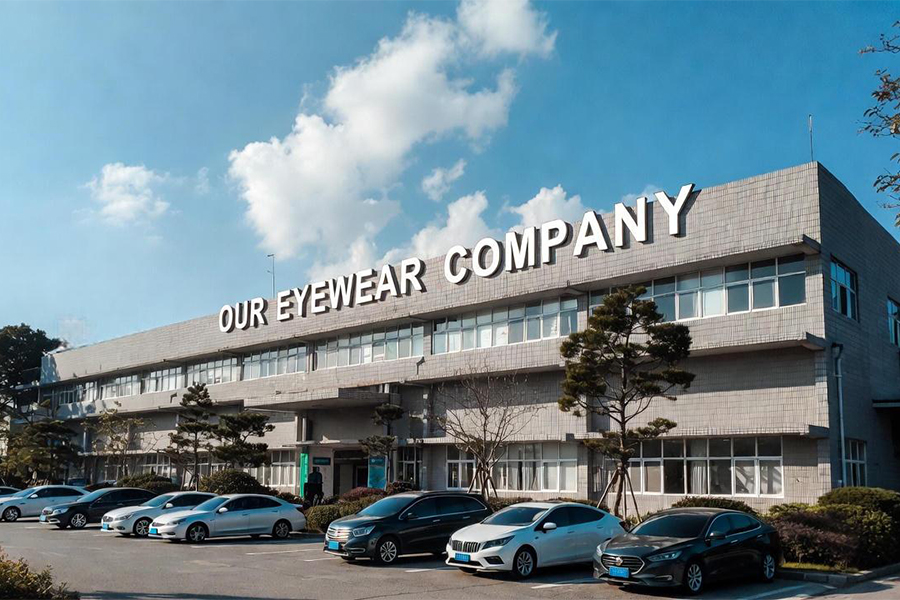
Yintai Eyewear is a leading manufacturer based in Shenzhen, Guangdong Province, China, specializing in eyewear production. After 15 years of dedicated development, we have evolved into a modern enterprise integrating technological R&D, precision manufacturing, and global sales.
Located in the industrial park at Fuji Land Building, our facility spans over 5,000 square meters of modern factory space. Equipped with fully automated production lines, CNC machining centers, and Class 10,000 cleanrooms, we ensure stable production capacity and consistent high quality across all orders.
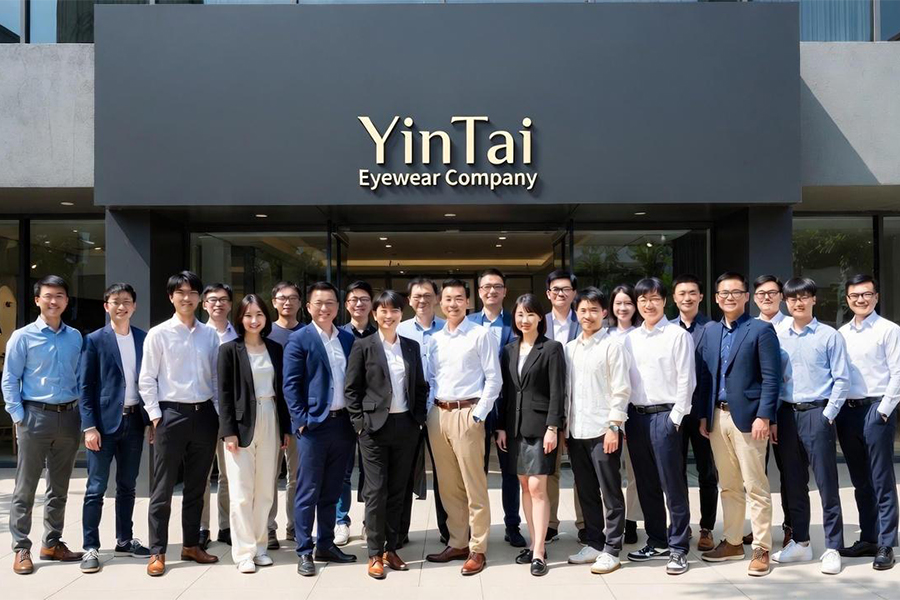
Our hard power relies on our team. We have over 200 dedicated employees, including a 10-member elite R&D and technical team that continuously drives product innovation, CAD ergonomics modeling, and process optimization.
Whether crafting complex custom vintage acetate frames, ultra-light pure titanium optical structures, or high-wrap sports UV sunglasses, our engineering team translates client concepts into physical prototypes with speed and fidelity.
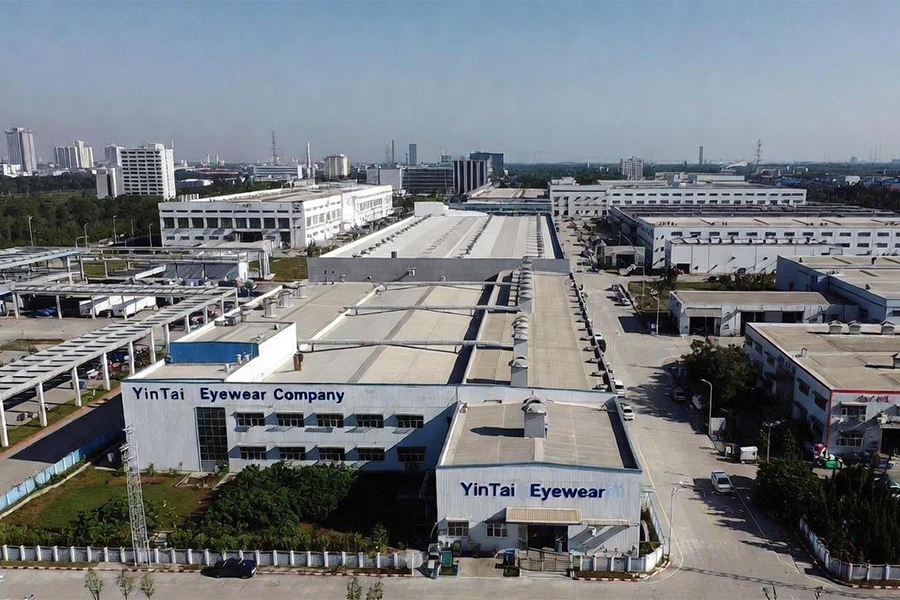
From raw material procurement (sourcing Mazzucchelli bio-acetate and pure titanium) and mold development to finished product assembly, Yintai achieves full vertical integration across core production processes. This setup directly results in controllable costs, accelerated delivery cycles, and reliable product quality.
With a monthly capacity reaching 20,000+ pieces, our infrastructure easily supports the large-scale order demands of global brands and chains.
End-to-end ODM solutions engineered for efficiency, speed, and uncompromising quality standards.
5,000+ sqm footprint with over 200 full-time experts delivering 20,000+ finished units monthly to meet peak seasonal demands seamlessly.
Comprehensive ISO9001 quality system spanning IQC (Incoming Quality), IPQC (In-Process Control), and FQC (Final Quality Check), achieving a 99% pass rate.
Our dedicated international sales and technical support personnel ensure every query or project update receives an intelligent response within 24 hours.
Navigating the journey from conceptual sketching to mass market distribution requires a structured ODM workflow. Our enterprise process eliminates supply chain friction, protects client intellectual property, and guarantees design precision at every phase.
Collaborative design definition. Our 10-member R&D team renders 3D digital CAD prototypes, calculating optical bridge weight balance, temple flexing, and lens bevel angles.
Precision high-speed CNC milling creates real physical samples within 7–10 days. Clients test fitment, color swatches, hinge tension, and optical clarity.
Master molds are cut. Cellulosic acetate sheets undergo temperature-controlled aging for 72+ hours to prevent frame warp before automated milling.
100% inspection under UV spectrum analyzers and impact drop-ball tests. Packaged securely with customized branding and delivered globally.
Legal compliance is a fundamental requirement for international eyewear distribution. Eyewear products entering North America, the European Union, Australia, or East Asia must comply with stringent regulatory frameworks covering optical power, material toxicity, and impact safety.
Our UV protection sunglasses strictly comply with EN ISO 12312-1:2013/A1:2015 standards. Lenses are classified into filter categories 0 to 4 based on visible light transmittance (VLT), providing verified protection against spectral UVA and UVB radiation across all EU member states.
For US market imports, all sunglasses lenses undergo rigorous drop-ball testing (a 5/8-inch steel ball dropped from a height of 50 inches) in accordance with FDA 21 CFR 801.410 requirements, ensuring shatterproof durability for end-users.
Frameworks and metal hardware are rigorously tested for hazardous substances. Our electroplating and acetate treatments are completely nickel-safe, non-toxic, and fully compliant with EU REACH and RoHS regulations to prevent skin allergies.
Our production facilities maintain an audited ISO 9001:2015 quality management system. Standardized operations ensure batch-to-batch consistency and traceably controlled manufacturing parameters.
Clear, direct insights addressing common procurement, technical, and logistics inquiries.
Browse our extensive collection of certified acetate, optical, and UV protective sunglasses solutions.
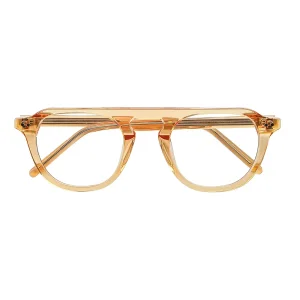
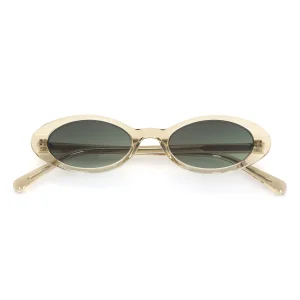
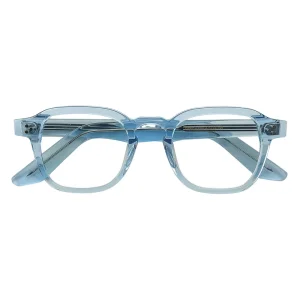
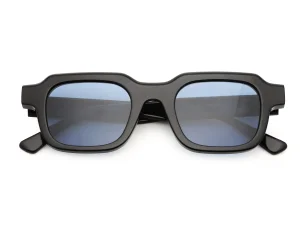
Connect with our senior optical engineering team today to receive a comprehensive technical proposal, instant sample quotes, or custom CAD development within 24 hours.
Request Technical Quotation & Samples Yintai Eyewear