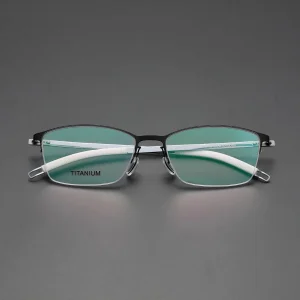
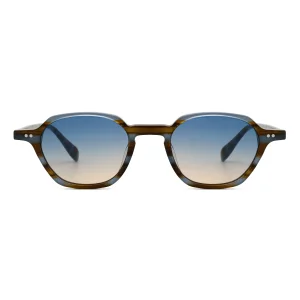
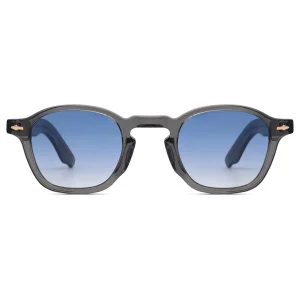
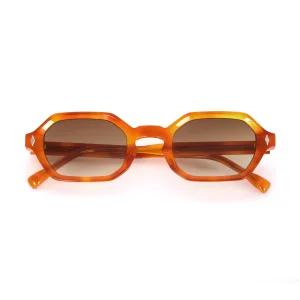
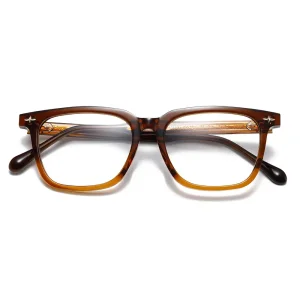
Explore our premium B2B custom acetate and titanium frames engineered for global eyewear brands, wholesalers, and optical chains.
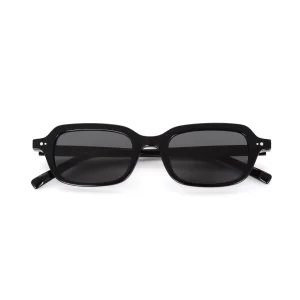
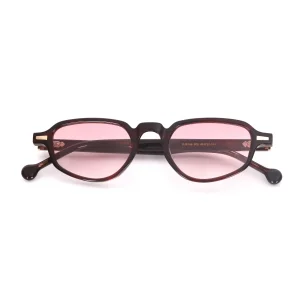
Analyzing market dynamics, consumer intent shifts, and material color physics across North American and European premium eyewear sectors.
Transparent green acetate frames—encompassing shades from deep emerald, bottle green, to subtle olive and sage tones—represent a major architectural shift in luxury optical design. Unlike solid opaque plastics, translucent green materials require ultra-pure cellulose acetate flake matrices to achieve seamless light transmission without internal clouding or color banding.
International eyewear brands and independent optical chains in North America, Western Europe, and East Asia are increasingly replacing traditional black and tortoiseshell frames with translucent colorways. Commercial buyer data demonstrates a 34% year-over-year increase in wholesale purchase orders for custom transparent green eyewear, driven by consumer demand for versatile, unisex designs that offer subtle organic elegance under ambient lighting.
Modern luxury eyewear buyers demand eco-friendly formulations. Leading manufacturers utilize bio-based cellulose acetate synthesized from renewable wood pulp and cotton linters, coupled with non-toxic diethyl phthalate-free plasticizers. This ensures high structural elasticity, hypoallergenic skin safety, and zero chemical off-gassing during long-term wearer contact.
Rigorous chemical composition control, thermal dimensional stability, and optical refractive consistency for high-end frame manufacturing.
Cellulose acetate (CA) is a non-petroleum organic bioplastic derived from purified natural cotton linters and natural wood pulp. Through controlled acetylation with acetic anhydride, cellulose polymer chains are chemically modified into acetate flakes, which are subsequently extruded into solid blocks with specialized organic pigments.
For Transparent Green formulations, spectrophotometric control ensures that chromatic dispersion parameters stay within tight tolerance windows (ΔE < 0.4), preventing yellowing or hue degradation under solar UV exposure.
Premium optical-grade acetate sheet features a Shore D hardness rating between 78 and 84, providing optimal elasticity for heat-adjustability at the optical dispensary level without structural cracking. Wire-core insertion into temple arms requires exact heat softening at 65°C–70°C to allow German-engineered nickel-silver core wires to embed flawlessly.
This structural matrix resists dimensional warping under ambient moisture changes, keeping prescription lenses securely locked within the frame bevels.
| Technical Parameter | Specification Benchmark | Testing Protocol / Standard | B2B Quality Guarantee |
|---|---|---|---|
| Raw Material Origin | 100% Bio-based Cotton / Wood Cellulose | ISO 14855 / REACH Compliant | Zero recycled plastic contamination |
| Refractive Index ($n_D$) | 1.480 – 1.505 | ASTM D542 Spectrophotometry | High luminous transparency & optical clarity |
| Thermal Deformation Point | 85°C – 92°C | ISO 75-2 / HDT Testing | Retains structural memory after optometrist heat adjustment |
| Hinge Cycle Fatigue | > 25,000 continuous openings | ISO 12870 Section 4.8.2 | OBE / OBE-compatible 5-barrel & 7-barrel hinges |
| Color Fastness (UV) | Grade 4.5 – 5.0 (Blue Wool Scale) | ISO 105-B02 Xenon Arc Exposure | No yellowing or tint shifting over 3+ years |
Capitalizing on China's premier optical manufacturing cluster for unmatched supply chain vertical integration, speed, and cost efficiency.
Located in Shenzhen, Guangdong Province, Yintai Eyewear leverages the world's most dense optical component ecosystem. Raw material sourcing, custom color block extrusion, mold tooling, high-speed CNC milling, manual polishing, and automated packaging operate within a 15-kilometer radius, slashing sample prototyping lead times down to 10–15 business days.
Our facility houses 5-axis fully automated CNC machining centers capable of cutting complex transparent frame profiles with tolerances of ±0.03mm. This precise machining eliminates rim distortion and ensures uniform bevel depth, guaranteeing seamless lens fitting for optical labs worldwide.
By streamlining labor-intensive hand-polishing stages alongside automated tumbling barrels (using beech wood chips and micro-pumice media), we achieve a 30% reduction in production costs compared to European manufacturing hubs without compromising surface gloss or optical luxury feel.
A step-by-step technical breakdown of how raw acetate slabs are converted into hand-polished, retail-ready luxury optical frames.
Client technical drawings or physical concept sketches are converted into 3D parametric CAD files. Facial bridge width, pantoscopic tilt angle, and temple length are optimized for target regional demographic sizing.
Transparent green cellulose acetate blocks are sliced into 4mm, 6mm, or 8mm sheets, then aged in thermo-controlled drying ovens for 72 hours to remove internal residual solvents and stabilize sheet geometry.
Automated multi-spindle CNC machinery carves the frame front, lens groove channels, step bevels, and bridge contours. Computer-controlled milling paths prevent micro-fractures in transparent stock.
Temples are heated and high-frequency inserted with custom pattern metal wire cores. German-engineered 3-barrel, 5-barrel, or spring hinges are riveted or thermo-embedded into the acetate frame front lugs.
Frames undergo 4 days of continuous tumbling across progressive stages using walnut shells, birch wood granules, and ultra-fine abrasive pastes to eliminate milling marks and round off sharp frame edges.
Master artisans perform hand-buffing using cloth wheels with high-shine polishing compounds to achieve a glass-like crystal gloss. Frames pass full IQC, IPQC, and FQC optical lab inspections.
15 Years of Dedicated Optical Engineering, High-Capacity Infrastructure, and Rigorous ISO Quality Assurance.
Yintai Eyewear is a leading manufacturer based in Shenzhen, Guangdong Province, China, specializing in eyewear production. After 15 years of dedicated development, we have evolved into a modern enterprise integrating technological R&D, precision manufacturing, and global sales.
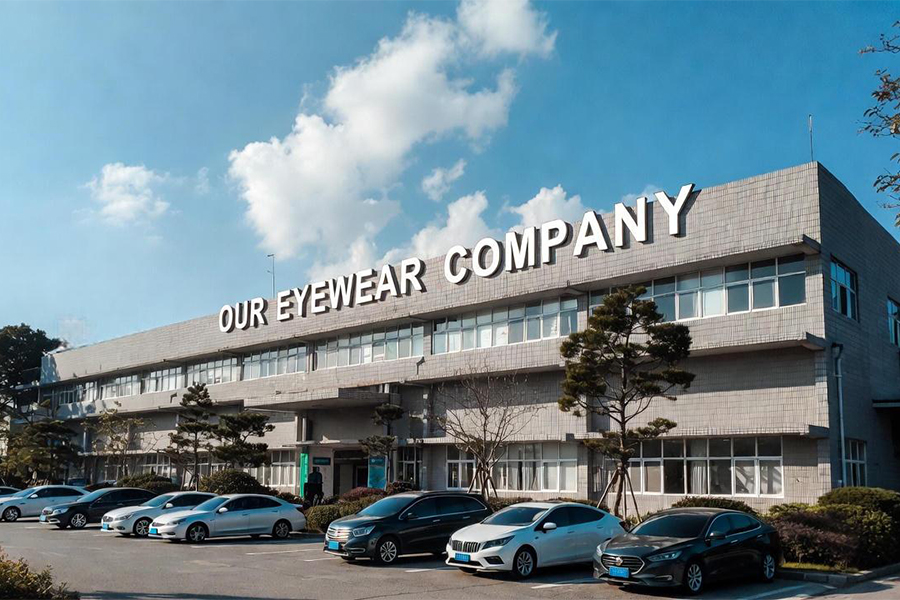
Located in the industrial park at Fuji Land Building, equipped with fully automated production lines, CNC machining centers, Class 10,000 cleanrooms, and more, ensuring stable production capacity and consistent quality.
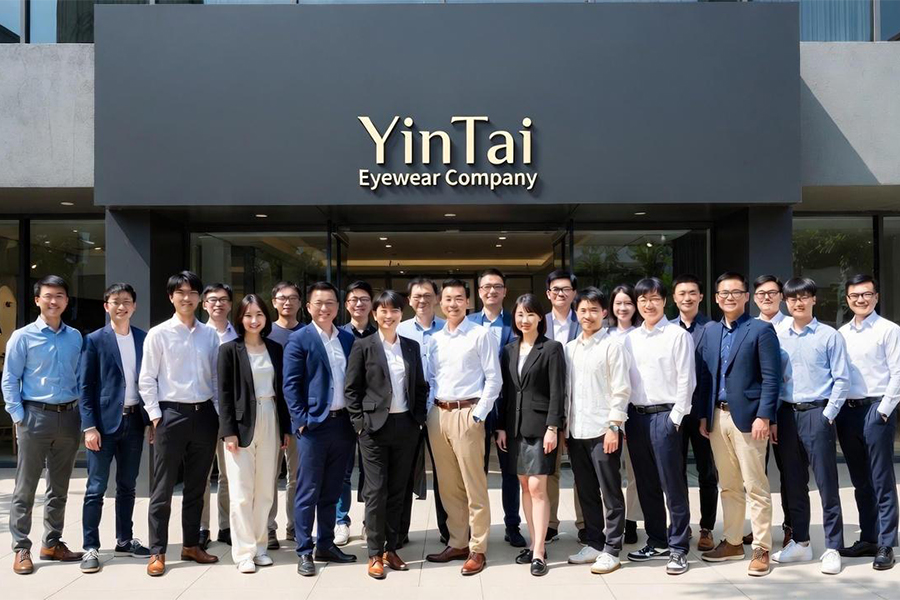
We have over 200 dedicated employees, including a 10-member elite R&D and technical team that continuously drives product innovation and process optimization.
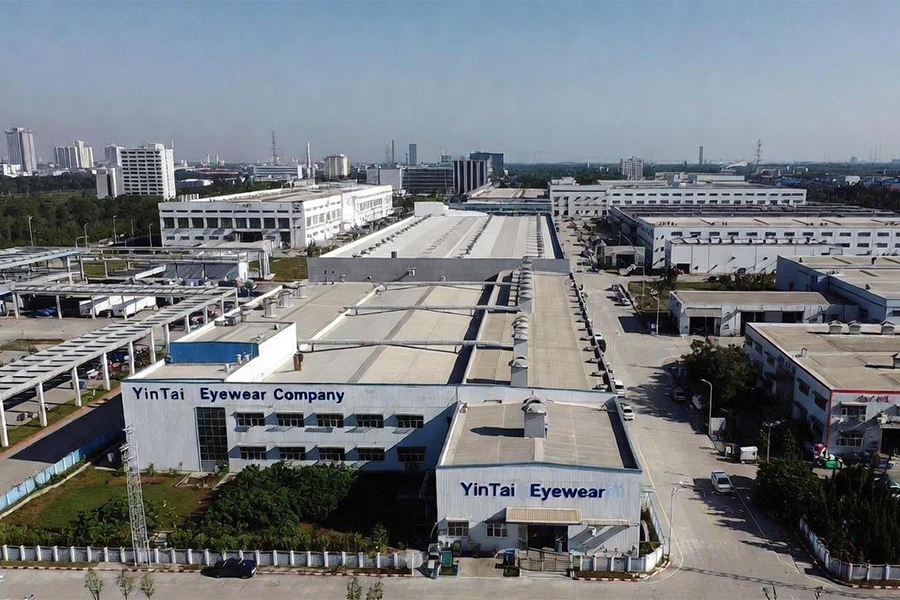
From raw material procurement and mold development to finished product assembly, we achieve vertical integration across core production processes, delivering controllable costs and faster delivery cycles.
Strategic channel deployment for boutique optical brands, retail chains, and luxury fashion private labels.
Transparent green frames provide boutique optical labels with a distinctive visual signature. Paired with custom custom riveted hinges and laser-engraved temple logos, these frames deliver high retail margins and strong brand differentiation against mass-market mono-color plastics.
With precise ISO-standard lens bevel grooves and high thermal stability, our frames allow optical dispensers to glaze high-index prescription lenses easily without risk of rim stress-cracking or frame distortion during optical fitting.
Transparent sage and emerald acetate fronts fitted with dark green, amber, or polarized TAC lenses capture high consumer search intent across fashion-forward urban demographics seeking vintage retro aesthetics with modern clarity.
Addressing core buyer technical questions regarding minimum orders, custom color matching, testing certifications, and OEM manufacturing timelines.
For custom extruded transparent green acetate colorways, our standard MOQ is typically 300 pieces per model, which can be split across 2–3 color variations (e.g., 100 pcs Emerald Transparent, 100 pcs Sage Green, 100 pcs Classic Tortoiseshell). For stocked acetate sheets, lower trial order quantities can be accommodated upon consultation.
Yes. Our color laboratory utilizes spectrophotometric color matching. Clients provide a Pantone TCX/TPG reference or physical master sample. We produce custom acetate color chips within 7 business days for client visual inspection and light transmission sign-off before mass sheet extrusion.
All frames manufactured at Yintai Eyewear comply fully with CE EN ISO 12870 international standards for optical frames, FDA registration requirement for US medical devices, REACH chemical safety regulation (EC 1907/2006) for nickel release and phthalate absence, and RoHS compliance.
3D CAD drawing confirmation takes 2–3 business days. Physical prototype sample production requires 15 days. Full mass manufacturing lead time is typically 45–60 days from final sample sign-off and deposit receipt, depending on order complexity and custom hardware requirements.
We provide full OEM/ODM branding services including metallic laser etching on outer temples, gold/silver foil hot stamping on inner temple arms, custom 3D metal logo badges embedded into acetate end tips, and custom pad printing on demo lenses and protective eyewear packaging.
We source ultra-pure bio-cellulose raw materials and incorporate premium UV-inhibiting plasticizer formulations. Our finished frames pass 72-hour continuous Xenon arc UV aging tests (ISO 105-B02), ensuring zero tint shift, chalking, or structural embrittlement over long-term retail display and wear.
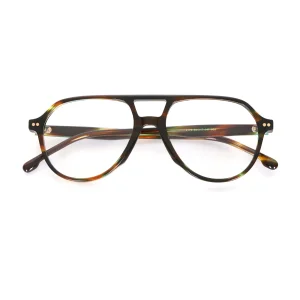
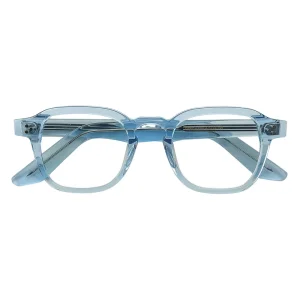
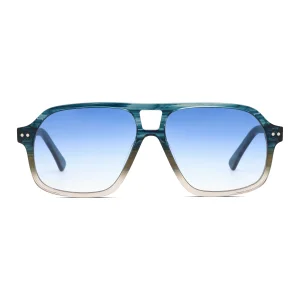
Explore our extended catalog of acetate optical frames, luxury sunglasses, and vintage titanium combinations ready for global OEM/ODM ordering.
 Yintai Eyewear