Woman Sunglasses is moving beyond seasonal fashion. Global buyers now assess shape, protection, comfort, materials, and reliable supply. Grand View Research estimates the global sunglasses market reached approximately USD 20.7 billion in 2023. It projects continued growth through 2030, supported by fashion consumption, outdoor lifestyles, and rising UV-awareness. Estimates vary by research company. That difference deserves attention.
The Vision Council has repeatedly highlighted the protective role of eyewear. Its president and CEO, Ashley Mills, stated, “Sunglasses are more than a fashion accessory; they are an important tool for protecting your eyes from harmful UV rays.” This principle gives the trend discussion a stronger foundation. Cat-eye frames, narrow rectangular lenses, oversized silhouettes, transparent acetate, metal details, and sustainable materials now compete for global attention. Yet appearance alone cannot guide purchasing decisions. Buyers should check UV protection claims, lens quality, frame durability, and supplier documentation. Details matter. A bright beach, a dusty city street, and a long airport transfer create different wearing experiences.
This guide examines the Top 10 Woman Sunglasses Trends for Global Buyers through both commercial and practical lenses. It considers color direction, face-shape compatibility, comfort, packaging, price positioning, and regional preferences. Some forecasts may overstate sustainability demand. That is a limitation. Real buying behavior remains uneven, especially when attractive pricing outweighs material claims. The strongest opportunities usually combine visible design with measurable quality. Trends change quickly. Trust should not.
Women’s sunglasses trends describe changing preferences in frame shape, lens function, materials, color, and wearing occasions. They are not limited to runway styling. The category includes prescription-compatible designs, everyday eyewear, sports-oriented options, and protective outdoor sunglasses. A useful market definition considers both appearance and performance. Buyers increasingly compare ultraviolet protection, glare reduction, lens clarity, fit, durability, and comfort.
The global market scope covers online retailers, optical stores, department stores, and professional eyewear channels. It also includes different price levels, from accessible fashion products to technically engineered eyewear. Regional demand varies. Large lenses may suit strong sunlight, while lighter frames can appeal to humid climates and frequent commuting. Face shape, nose-bridge height, temple length, and local style preferences influence purchasing decisions. Small fitting details matter more than many trend reports admit.
Current trends often include narrow frames, oversized silhouettes, soft neutral colors, transparent materials, tinted lenses, and recycled or bio-based components. However, trend labels are imperfect. A popular shape may feel unstable after ten minutes of walking. I have found that balanced weight and secure hinges often affect satisfaction more than color. Reliable suppliers should provide measurable lens specifications, material information, size charts, and clear quality checks. Buyers should also test samples under real daylight, because studio images can hide reflections, pressure points, and weak visual contrast.
Women’s eyewear choices are shaped by protection, comfort, identity, and local climate. Grand View Research valued the global sunglasses market at about US$20.88 billion in 2023. It also forecasts a 6.4% compound annual growth rate through 2030. This growth supports demand for oversized frames, cat-eye silhouettes, narrow lenses, transparent materials, soft metallics, and lightweight designs. However, fashion alone rarely closes a sale. Buyers often check lens quality, frame flexibility, nose-pad comfort, and weight before choosing a style.
UV protection is becoming more important.
The World Health Organization reports that at least 2.2 billion people have near or distance vision impairment worldwide. This figure does not measure sunglasses demand, but it highlights the wider importance of responsible eye care. Polarized lenses, glare reduction, and reliable UV filtering can influence choices in coastal, tropical, and high-altitude markets. Clear product information matters. It should explain protection levels without exaggerated medical claims.
Fit remains a quiet sales driver.
Wide frames may suit some faces, yet they can slide during commuting or outdoor work. Smaller frames may feel secure but appear less expressive. That tension shapes several of the top ten trends. Color preferences also change by region; warm neutrals, translucent tones, and dark lenses do not perform equally everywhere. A buyer should test samples in real light, not only in studio photography. The ranking is useful, but imperfect. Customer feedback may challenge it.
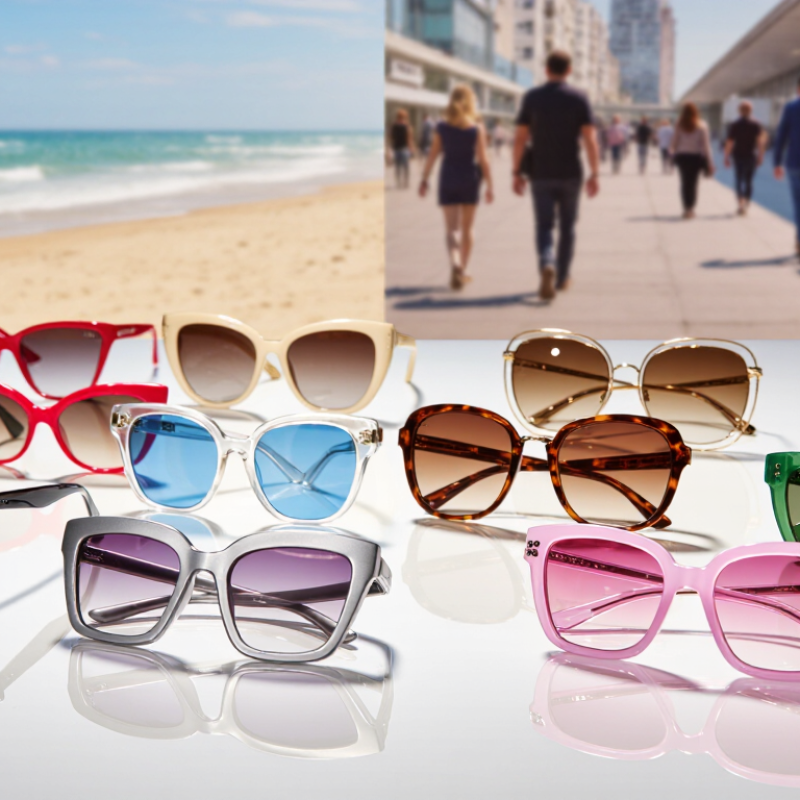
Women’s frame shapes are moving between soft structure and confident geometry. Oversized square frames remain practical for buyers seeking broad sun coverage and a strong fashion statement. Slim oval frames offer a lighter, quieter look for everyday styling. Cat-eye silhouettes continue to add lift around the eyes, while rounded frames soften sharper facial features.
Color direction is becoming more wearable. Warm tortoiseshell, muted olive, clear smoke, and translucent amber suit different wardrobes and markets. Metallic details are returning, but thinner temples often feel more comfortable during long wear. For global purchasing, check lens width, bridge fit, temple length, and hinge strength rather than relying on appearance alone. Small details matter.
Not every trend works everywhere. Very large frames may feel attractive online but become heavy in humid climates. Pale lenses can look refined, yet buyers may expect stronger glare protection. UV400 labeling, impact-resistant lens materials, and consistent quality checks support safer product selection. Adjustable nose pads can improve fit, although they may increase production complexity. Trend forecasts can miss local preferences. That is worth remembering. Baebele?
Global buyers are choosing women’s sunglasses for color, comfort, and measurable protection. Warm brown lenses soften bright streets and suit everyday outfits. Gray lenses preserve natural colors and work well near water. Olive and muted green lenses add contrast without looking harsh. Rose lenses remain popular for a softer, fashion-focused appearance. Gradient lenses balance sunlight above with clearer vision below. These five colors cover many seasonal preferences.
Materials are becoming more practical. Bio-based acetate offers a polished surface with a lighter environmental footprint, though its full impact still depends on production. Recycled metal creates slim frames and a precise fit. Flexible nylon helps reduce weight during travel and outdoor use. Clear frame materials also remain attractive, especially with tinted lenses. The finish should resist peeling and discoloration. Small defects can still appear, even in carefully made frames.
Functional features now influence wholesale decisions. Polarized lenses reduce reflected glare from roads and water, but they may affect some digital displays. Verified UV400 protection is essential, while independent test reports improve buyer confidence. Scratch-resistant coatings support longer use, although no coating is truly damage-proof. Hydrophobic treatments help rain slide away. Adjustable nose pads improve comfort across different face shapes. Photochromic lenses are convenient, but their performance can change inside vehicles. I recommend checking hinge strength, lens certification, and return terms before placing a large order.
Top 10 Women’s Sunglasses Trends for Global Buyers
Global buyers now evaluate women’s sunglasses through trend relevance, compliance, and repeat-order potential. Grand View Research estimates the global sunglasses market will expand at about 6% annually through 2030. That growth rewards careful sourcing, not quick copying. Current buying lists often include oversized frames, cat-eye shapes, narrow rectangles, wraparound shields, rimless designs, transparent acetate, soft metallics, colored lenses, retro aviators, and sport-inspired silhouettes.
Trend appeal must survive real-world testing. Buyers inspect hinge strength, lens clarity, UV protection, frame balance, and size consistency. A sample should be tested under bright outdoor light, not only photographed indoors. The U.S. Bureau of Labor Statistics reports that optical goods remain a regular consumer purchase category, but fashion demand changes faster than replacement cycles. Therefore, buyers usually prefer flexible minimum order quantities and several color options. Small test orders help reveal whether a pale pink lens sells beyond social media attention.
Material claims require evidence. Buyers should request laboratory documents, product specifications, and packaging details before confirming production. Intertek and SGS testing guidance commonly emphasizes UV performance, impact resistance, labeling, and chemical safety for eyewear products. Requirements vary by destination. That part is easy to underestimate. A supplier may offer attractive recycled content, yet provide weak traceability or inconsistent frame measurements. Buyers should compare sample data, inspection records, lead times, and defect allowances in one shared sheet. Trend-led sourcing is useful, but judgment remains imperfect. Forecasts can miss local face shapes, weather, and modesty preferences.
How global buyers evaluate and source trend-led sunglasses for commercial, quality, compliance, and seasonal performance.
| No. | Trend Direction | Typical Silhouette | Lens Direction | Common Material Options | Why Global Buyers Consider It | Key Sourcing Requirements | Quality and Compliance Checks | Commercial Priority |
|---|---|---|---|---|---|---|---|---|
| 1 | Oversized Statement Frames | Large square, soft-rectangle, and rounded frames with broad temples. | Solid black, brown gradient, smoke, and subtle translucent lenses. | Acetate, injected plastic, recycled nylon, and lightweight metal details. | Strong visual impact, broad age appeal, and good suitability for fashion-led displays and social-commerce imagery. | Confirm face-coverage proportions, balanced weight, temple strength, and consistent color matching across large frame surfaces. | Verify UV400 or equivalent UV protection claim, lens optical quality, hinge durability, nickel release where applicable, and required labeling. | High Reliable statement category |
| 2 | Slim Cat-Eye Frames | Narrow upswept corners with compact oval or almond-shaped lenses. | Dark smoke, warm brown, pale tint, and gradient lenses. | Acetate, stainless steel, memory metal, and mixed-material constructions. | Recognizable feminine styling with a compact profile that works well for curated fashion assortments. | Check symmetry between left and right eye shapes, corner alignment, nose-pad comfort, and the stability of slim temples. | Inspect frame geometry, lens seating, coating uniformity, corrosion resistance, and impact-performance documentation. | High Strong style recognition |
| 3 | Soft Oval and Oval-Rectangle Frames | Balanced oval, rounded rectangle, and softly curved geometric profiles. | Brown, champagne, olive, gray, and low-saturation gradient lenses. | Injected bio-based nylon, acetate, stainless steel, and lightweight alloys. | Versatile styling and relatively easy integration into everyday, workwear, and travel collections. | Prioritize comfortable bridge dimensions, low-pressure temples, neutral color palettes, and efficient size grading. | Measure frame alignment, lens centering, hinge movement, surface finish, and UV-transmission performance. | High Broad commercial usability |
| 4 | Transparent and Translucent Color | Clear, frosted, crystal, and softly tinted frames in contemporary shapes. | Smoke, tea, blue-gray, green-gray, or clear-looking cosmetic lenses. | Transparent acetate, injected nylon, bio-based polymers, and recycled plastic blends. | Creates a light, modern appearance and enables coordinated seasonal color stories without relying on heavy decoration. | Request color chips or master samples, define transparency tolerance, and test yellowing, surface haze, and color consistency. | Check material stability, UV exposure resistance, weld or injection marks, edge polishing, and accurate material declarations. | High Effective seasonal refresh |
| 5 | Retro Aviator Reinterpretations | Teardrop, pilot, double-bridge, and softened aviator shapes with feminine proportions. | Gradient, polarized, mirror, brown, gray, and green lenses. | Stainless steel, titanium-look alloys, acetate brow bars, and adjustable nose pads. | Combines familiar functionality with a vintage-inspired look and can serve travel, driving, and outdoor lifestyle ranges. | Check bridge comfort, nose-pad adjustment, solder or weld quality, temple flexibility, and consistent lens curvature. | Verify lens-category information, polarization consistency where claimed, corrosion resistance, and mechanical strength. | High Useful cross-channel style |
| 6 | Bold Geometric Frames | Angular hexagon, octagon, sharp square, and asymmetric-inspired outlines. | Solid black, gray, amber, clear, and restrained colored lenses. | Acetate, stainless steel, aluminum alloy, and injection-molded polymers. | Provides differentiation in crowded assortments and supports editorial, boutique, and occasion-focused collections. | Control sharp edges, confirm left-right symmetry, assess wearable proportions, and request high-resolution pre-production samples. | Inspect edge finishing, frame stress points, lens fit, hinge durability, and resistance to deformation during transport. | Medium–High Higher fashion differentiation |
| 7 | Minimal Metal and Wire Frames | Thin oval, rectangular, geometric, and rimless or semi-rimless constructions. | Smoke, brown, gray, green, pale yellow, and lightly tinted lenses. | Stainless steel, titanium, aluminum alloy, and nickel-free metal options. | Lightweight appearance, understated styling, and suitability for premium-looking everyday assortments. | Confirm frame weight, plating consistency, weld quality, nose-pad security, and resistance to bending during packing. | Check nickel-release requirements, coating adhesion, corrosion testing, lens retention, and temple-cycle performance. | Medium–High Lightweight premium cue |
| 8 | Polarized Outdoor-Lifestyle Styles | Wrap-inspired, square, rounded, and sport-influenced everyday frames. | Polarized gray, brown, green, and smoke lenses with optional mirror finishes. | TR90-style nylon, injected nylon, polycarbonate, rubberized components, and metal reinforcement. | Links fashion with glare reduction and outdoor use, supporting travel, driving, beach, and active-lifestyle merchandising. | Require polarization samples, stable lens bonding, secure grip points, impact-resistant construction, and protective packaging. | Validate polarization performance, UV protection, impact resistance, lens distortion, sweat resistance, and product-use claims. | High Function-led demand |
| 9 | Eco-Positioned Materials | Mostly classic or contemporary shapes designed to let the material story support the product. | Neutral solid, gradient, and softly tinted lenses that complement natural-looking frame colors. | Recycled acetate, recycled nylon, bio-based polymers, stainless steel, and FSC-certified packaging components. | Supports sustainability-focused assortment narratives when claims are specific, documented, and relevant to the target market. | Request chain-of-custody or material-content documentation, define recycled-content percentages, and avoid vague environmental wording. | Review certification scope, material declarations, chemical compliance, packaging claims, durability, and end-of-life information. | Medium–High Documentation-dependent |
| 10 | Decorative Temples and Refined Details | Wearable frames with sculpted temples, layered color, subtle metal accents, or small decorative elements. | Classic brown, black, gray, and gradient lenses to keep the detail commercially wearable. | Acetate laminations, plated metal, stainless steel, injected polymers, and embedded decorative components. | Adds perceived design value and visual distinction without changing the core lens shape or size dramatically. | Test attachment strength, detail placement, snag resistance, color matching, and packaging protection during shipment. | Inspect sharp points, plating adhesion, component security, abrasion resistance, and decoration-related chemical compliance. | Medium Value-added detail |
It includes fashion frames, prescription-compatible designs, sports eyewear, and protective outdoor sunglasses. Appearance and performance both matter.
Oversized square frames provide broad coverage and a bold look. Slim ovals feel lighter. Cat-eye frames lift the eye area.
Warm tortoiseshell, muted olive, clear smoke, and translucent amber suit many wardrobes. Color preferences still vary by region.
Check ultraviolet protection, glare reduction, clarity, and impact resistance. UV400 labeling can support safer selection.
Compare lens width, bridge height, temple length, and total weight. Secure hinges help during walking and commuting.
Not always. Large frames may feel heavy in humid weather. Test them outdoors for ten minutes before ordering widely.
Studio images can hide reflections, pressure points, and weak contrast. Real daylight reveals practical problems more clearly.
Transparent materials, recycled components, and bio-based materials are gaining attention. Material claims should include measurable specifications.
No. A fashionable shape may slip, press the nose, or feel heavy. Fit often matters more than color.
Reliable suppliers should provide size charts, lens specifications, material details, and consistent quality checks. Some details are easy to overlook.
This guide explores the evolving market for Woman Sunglasses, covering the styles, materials, and functional features that influence purchasing decisions worldwide. It defines the market scope by considering fashion eyewear, seasonal collections, everyday protection, and trend-focused products for different consumer groups. Global preferences are shaped by lifestyle, climate, cultural aesthetics, price expectations, sustainability awareness, and demand for comfort. Current design directions include oversized frames, refined cat-eye profiles, geometric silhouettes, softly rounded shapes, slim metal structures, and bold transparent frames. These options allow buyers to balance visual impact with practicality.
The article also reviews popular lens colors, including classic black, brown, gray, green, and subtle gradient effects, as well as common materials such as durable plastics, lightweight metals, and recycled alternatives. Functional features may include UV protection, polarized lenses, glare reduction, scratch resistance, and comfortable adjustable fittings. For global sourcing, buyers should evaluate trend relevance, product consistency, material quality, compliance documentation, minimum order quantities, customization capability, packaging, delivery reliability, and total cost before selecting suitable suppliers.

Yintai Eyewear