How to Choose the Best Men's Sunglasses for Wholesale?

Time:2026-10-12 Author:Oliver
0%

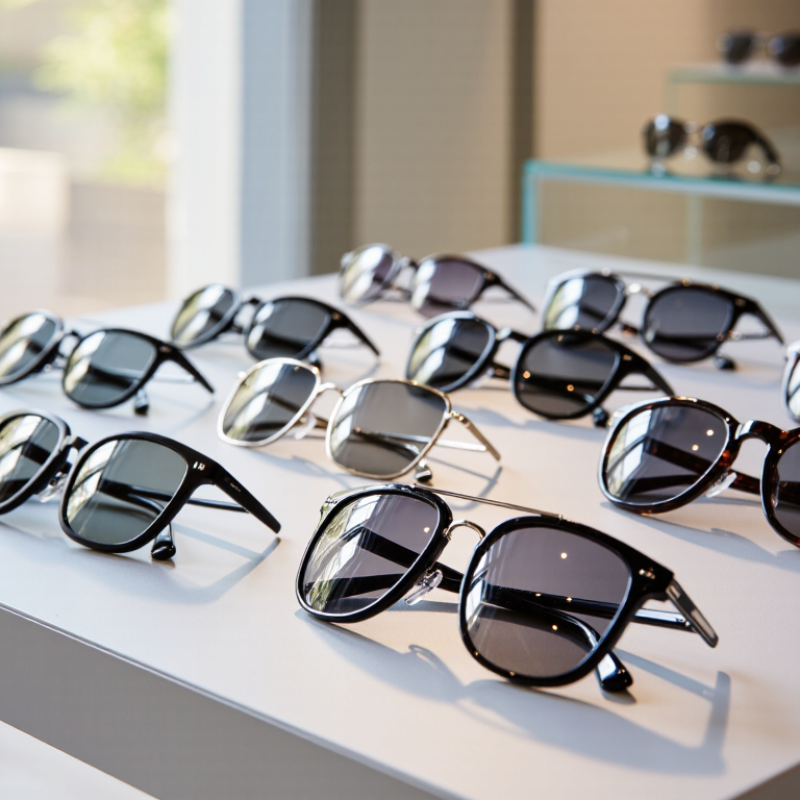
Choosing the best Men's Sunglasses for wholesale requires more than chasing low prices. It demands evidence, fit knowledge, and reliable supplier checks. Grand View Research valued the global sunglasses market at approximately USD 20.6 billion in 2022. It also projected a 5.3% compound annual growth rate through 2030. These figures suggest strong opportunity, but market growth does not guarantee wholesale success.

The Vision Council’s consumer research shows that sunglasses remain both protective eyewear and a fashion purchase. That combination shapes buying decisions. Retailers need polarized lenses, dependable UV protection, comfortable nose bridges, and styles suited to local customers. Dr. Gary Heiting, an optometrist and eyewear writer, states, “Sunglasses are more than just a fashion accessory; they are an important part of protecting your eyes.” His point is practical. A cheap frame can still create expensive returns.

Look closely.

A strong wholesale evaluation should compare lens quality, hinge durability, frame materials, packaging, minimum order quantities, and sample consistency. ISO-related testing claims should be verified through supplier documents, not attractive product pages. Product photographs can hide uneven coatings, loose temples, or uncomfortable edges. I have found that color trends often attract attention faster than technical specifications. That is also where buyers can make mistakes.

A perfect frame does not exist. Wholesale planning involves compromises between cost, protection, design, and inventory risk. This guide will examine those choices carefully. It will also explain how professional reports, supplier evidence, customer preferences, and real product inspection can support a more dependable Men's Sunglasses purchasing decision.
How to Choose the Best Men's Sunglasses for Wholesale?

Define Wholesale Demand Using Market Segments and 2024 Eyewear Growth Data

How to Choose the Best Men's Sunglasses for Wholesale?

Wholesale demand becomes clearer when buyers connect market segments with 2024 eyewear growth data. Recent industry reports indicated continued growth in eyewear, supported by fashion purchases, outdoor activities, and online retail. However, growth figures vary by region and product category. Forecasts are not guarantees.

Start with the customer, not the frame. Value-focused shoppers may prefer durable polycarbonate lenses and simple black styles. Outdoor customers often seek lightweight frames, polarized lenses, and secure nose pads. Younger online buyers may choose bold shapes, transparent colors, and short seasonal collections. Premium shoppers usually examine hinge quality, lens clarity, and packaging details.

For each segment, compare wholesale cost, expected selling price, search interest, and previous sell-through. A low unit price can still create losses if returns remain high. I have seen buyers overestimate novelty colors. Some stayed in storage longer than expected.

Tips: Build a small test order before committing to large quantities. Track sales by color, size, lens type, and customer age group. Review the results after four to eight weeks. Ask retailers why products moved slowly. Their comments may reveal poor fit, weak displays, or unclear product information. Also verify UV protection claims through reliable supplier documents. Do not treat 2024 growth data as a substitute for local evidence. A regional market may favor conservative designs, even during strong global growth. Leave room for correction.

Set UV Protection Standards: 99–100% UVA/UVB Blocking and UV400 Compliance

When choosing men’s sunglasses wholesale, make ultraviolet protection a purchasing standard, not a decorative claim. Require lenses that block 99–100% of UVA and UVB radiation. Also require verified UV400 compliance, meaning protection across ultraviolet wavelengths up to 400 nanometers. This matters during driving, beach use, and long outdoor shifts. Dark lenses alone prove nothing. They can reduce visible brightness while allowing harmful ultraviolet exposure.

Ask suppliers for current test reports from qualified, independent laboratories. Check the product code, lens material, test date, and measured transmission results. The report should match the samples you inspect. Test random pieces from each shipment, especially when frame colors or lens coatings change. A small handheld UV tester can support screening, but it should not replace laboratory verification. Attractive samples may fail basic checks after coatings are altered. That mistake is easy to miss.

Tips: Print UV400 information on product packaging, but never treat printing as proof. Keep batch records and request replacement procedures for failed units. Inspect lenses under strong light for bubbles, scratches, or uneven tint. Train buyers to ask one uncomfortable question: “Where is the evidence?” Standards must survive real handling, not just a sales conversation. Perfect confidence is tempting. Careful doubt is safer.

Compare Lens Categories by VLT, Polarization Efficiency, and ANSI Z80.3 Tests

For wholesale buying, compare lens categories by measurable performance, not tint alone. Visible light transmission (VLT) shows how much light reaches the eye. Category 0 lenses usually transmit 80–100% of light. Category 1 transmits 43–80%, Category 2 transmits 18–43%, and Category 3 transmits 8–18%. These ranges follow ISO 12312-1 guidance and help match products with indoor, driving, or bright outdoor use. Category 4 lenses transmit only 3–8% and are unsuitable for driving.

Polarization efficiency deserves separate testing. A polarized lens should reduce reflected glare from water, glass, and road surfaces. Laboratory reports often show approximately 99% polarization efficiency in well-made lenses, but buyers should request the test method and tolerance. The Vision Council’s consumer research continues to identify glare reduction as a major reason people purchase sunglasses. Still, marketing claims can hide uneven performance. Check multiple samples, especially around the lens edges.

ANSI Z80.3 testing examines optical quality, transmittance, ultraviolet protection, and impact resistance. Ask suppliers for current laboratory reports, batch identification, and test conditions. A passing report supports reliability, but it does not guarantee every shipment matches the sample. I have seen small tint differences appear between production lots. That matters. Compare VLT measurements, polarization efficiency, and ANSI results in one purchasing sheet. The CIE’s ultraviolet guidance also supports blocking wavelengths below 400 nanometers, a practical benchmark for wholesale quality checks. Clearance data alone is not enough.

Evaluate Frames Through Materials, Hinge Cycles, Fit Metrics, and ISO 12312-1

How to Choose the Best Men's Sunglasses for Wholesale?

Evaluate Frames Through Materials, Hinge Cycles, Fit Metrics, and ISO 12312-1

Wholesale buyers need more than attractive samples. The Vision Council’s consumer research indicates that roughly four in five U.S. adults wear sunglasses. Durability therefore affects repeat orders and returns. Compare acetate, injected polymer, stainless steel, and lightweight alloys. Inspect edge finishing, coating adhesion, and frame recovery after bending. Material names can mislead. Request laboratory composition records, not only supplier descriptions.

Hinge performance deserves a measurable test. Ask suppliers to document opening and closing cycles, spring recovery, screw loosening, and barrel deformation. A practical sample check can include 500 to 1,000 manual cycles, followed by alignment and torque inspection. That is not enough. Production validation should use a repeatable machine and defined failure limits. My experience suggests that shiny hinges often hide weak tolerances. Check several units from different cartons.

Fit data should include lens width, bridge width, temple length, front curvature, and pantoscopic angle. Measure ten pieces per colorway, then record variation. A two-millimeter bridge difference can change pressure around the nose. ISO 12312-1 provides requirements for general-use sunglasses, including optical quality, transmittance, and ultraviolet protection. Ask for current test reports tied to the exact model. The World Health Organization attributes about 20% of cataract cases to ultraviolet exposure. Dark lenses alone prove little. Category markings and UV test results matter more. Wholesale decisions should remain evidence-led, even when the sample looks perfect.

Verify Supplier Capacity, MOQ, Defect Rates, Lead Times, and Wholesale Margins

Choosing men's sunglasses for wholesale starts with evidence, not a polished catalog. Ask suppliers about monthly output, current orders, material sources, and production photos. A factory claiming 50,000 pieces monthly should show realistic staffing and equipment. Request samples from different batches. Small details matter. Check hinge alignment, lens clarity, frame tension, and packaging damage. I once found a supplier’s sample quality exceeded its packed goods. That uncomfortable gap changed my inspection plan.

MOQ should match your test budget and storage space. A low MOQ sounds useful, but it may hide higher unit costs. Ask how defects are recorded and corrected. Use a written tolerance for scratched lenses, loose hinges, or uneven printing. Do not accept vague promises. Confirm pre-production approval, inspection timing, replacement terms, and lead times in writing. Lead time should include production, quality checks, packing, and shipping preparation. Request separate dates for sampling and bulk orders.

Wholesale margins need more than the factory price. Add freight, inspection, packaging, applicable import charges, payment fees, and expected returns. Then compare the landed cost with a realistic selling price. Leave room for discounts without damaging cash flow. An attractive margin can disappear quickly when defect rates reach five percent. Review supplier records, not only claims. Independent inspection can reveal repeated faults before shipment. My own early estimates were too optimistic because I ignored slow-moving stock. Recheck demand, storage costs, and reorder timing before approving a larger quantity.

How to Choose the Best Men's Sunglasses Supplier for Wholesale

Suggested supplier-screening weights for verifying production capacity, MOQ, defect rates, lead times, and wholesale margins.

Capacity ≥ 10,000 units/month
MOQ ≤ 500 units/style
Defect Rate ≤ 2%
Lead Time ≤ 30 days
Gross Margin ≥ 35%

Use these planning benchmarks to compare suppliers consistently. Capacity and defect control protect supply continuity, while MOQ, lead time, and margin determine how efficiently you can launch and replenish men's sunglasses in wholesale channels.

FAQS

How should wholesalers identify demand for men’s sunglasses?

Start with customer groups, not frame designs. Value shoppers may prefer durable lenses and simple black frames. Outdoor buyers often want lightweight frames, polarized lenses, and secure nose pads. Younger online customers may choose bold shapes and transparent colors. Premium buyers usually inspect hinges, lens clarity, and packaging. Forecasts help, but local sales evidence matters more.

Why should wholesalers place a small test order?

A test order limits storage risk. Track sales by color, size, lens type, and customer age. Review results after four to eight weeks. Ask retailers why items sold slowly. Poor fit, weak displays, or unclear information may explain weak sales. I once overestimated novelty colors. They stayed in storage longer than expected.

What does VLT mean when comparing sunglass lenses?

VLT means visible light transmission. It shows how much light reaches the eyes. Category 0 usually transmits 80–100% of light. Category 1 transmits 43–80%. Category 2 transmits 18–43%. Category 3 transmits 8–18%. Category 4 transmits 3–8% and is unsuitable for driving.

How can buyers evaluate polarized lenses?

Polarized lenses should reduce glare from water, glass, and roads. Request laboratory results showing the test method and tolerance. Well-made lenses may achieve about 99% polarization efficiency. Test several samples, including lens edges. Marketing language can hide uneven performance. Check the evidence.

What documents should suppliers provide for lens quality?

Request current laboratory reports, batch identification, and testing conditions. Check ultraviolet protection, optical quality, transmittance, and impact resistance. Blocking wavelengths below 400 nanometers is a useful benchmark. A passing report supports reliability. It does not prove every shipment matches the sample. Tint differences can appear between production lots.

How can wholesalers check a supplier’s production capacity?

Ask about monthly output, existing orders, material sources, and production photographs. Request samples from different batches. Inspect hinge alignment, lens clarity, frame tension, and packaging damage. Separate sample quality from packed-goods quality. My earlier inspection plan trusted samples too much. That was a mistake.

What should buyers confirm about MOQ, defects, and lead times?

Match the minimum order quantity with your budget and storage space. Ask how defects are recorded and corrected. Define tolerances for scratched lenses, loose hinges, and uneven printing. Confirm approval procedures, inspection dates, replacement terms, and shipping preparation. Lead times should cover production, inspection, packing, and shipment readiness.

How should wholesalers calculate realistic margins?

Include freight, inspections, packaging, import charges, payment fees, and expected returns. Compare total landed cost with a realistic selling price. Keep room for discounts. A five-percent defect rate can damage an attractive margin. Also consider slow-moving stock and storage costs. Recheck the numbers before approving larger quantities.

Conclusion

Choosing the best Men's Sunglasses for wholesale begins with understanding demand across market segments, such as sports, fashion, driving, outdoor work, and everyday use. Reviewing 2024 eyewear growth data can help buyers identify high-potential styles, price points, and customer preferences. Every model should provide reliable UV protection, ideally blocking 99–100% of UVA and UVB rays and meeting UV400 expectations.

Buyers should compare lens categories through visible light transmission (VLT), polarization efficiency, optical clarity, and relevant ANSI Z80.3 testing. Frame evaluation should include material durability, hinge-cycle performance, accurate fit measurements, comfort, and alignment with ISO 12312-1 requirements. Finally, supplier selection should be based on production capacity, minimum order quantities, defect rates, lead times, quality-control procedures, and realistic wholesale margins. A balanced review of protection, performance, style, and supply reliability can support confident purchasing decisions and reduce long-term inventory risks.

Oliver

Oliver

Oliver is a seasoned marketing professional with a wealth of expertise in driving brand awareness and engagement. With a deep understanding of our company's product offerings, he consistently delivers high-quality content that enriches our professional blog. His insights not only shed light on......