2026 Best Types of Sunglasses For Women?

Time:2026-09-17 Author:Liam
0%

Choosing the best Sunglasses For Women in 2026 involves more than following seasonal fashion. A beautiful frame should also protect your eyes, fit securely, and support daily comfort.

This guide explores practical styles for commuting, travel, driving, sport, and relaxed weekends. Oversized sunglasses can create generous coverage, while cat-eye frames add a sharper, vintage-inspired impression. Aviators remain versatile, but their thin nose bridges may slide on some faces. Square frames often balance softer features, while rounded designs can soften stronger jawlines. These are useful starting points, not strict rules.

Fit matters most.

Reliable eye-care guidance recommends lenses that block 99–100% of UVA and UVB radiation. Look for clear labeling from reputable manufacturers. Polarized lenses can reduce reflected glare from roads, water, and glass, although they may affect the visibility of some digital screens. Darker lenses are not automatically safer. A poorly made, very dark lens can feel protective without providing adequate ultraviolet protection.

In reviewing current styles, we should admit one limitation: face-shape advice can oversimplify real people. Hair, prescription needs, bridge width, and personal confidence matter just as much. A frame that looks perfect online may pinch behind the ears in real life. Try walking, smiling, and looking downward before deciding. Professional fitting remains valuable, especially for prescription sunglasses or sensitive eyes. The best choice combines verified protection, comfortable construction, and a style you will actually wear. Trends change quickly. Your eyesight deserves steadier standards.
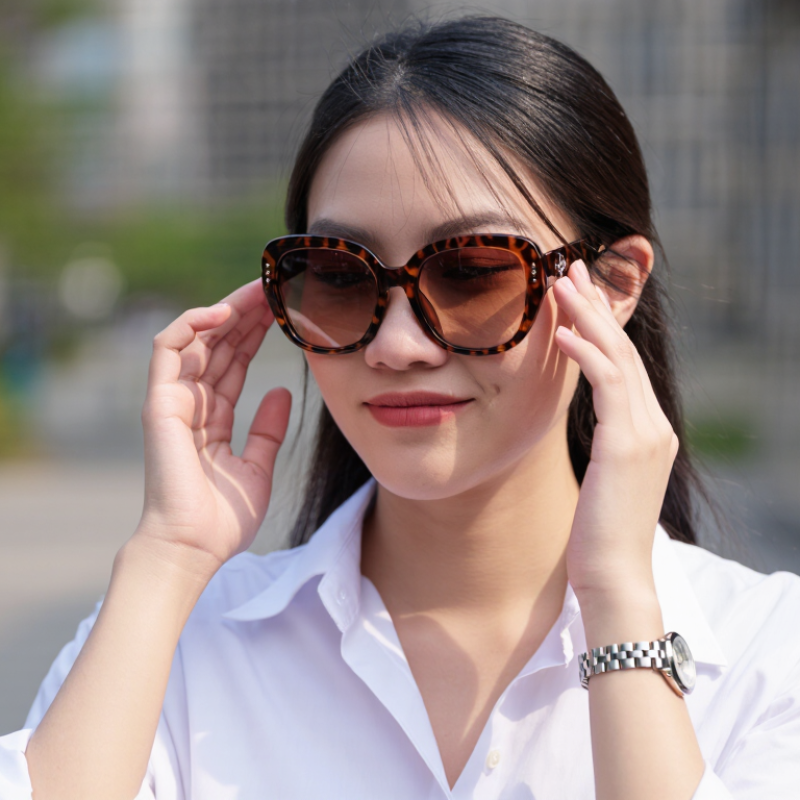
2026 Best Types of Sunglasses For Women?

What Makes a Sunglasses Style Ideal for Women in 2026?

The ideal women’s sunglasses style in 2026 should combine protection, comfort, and personal expression. Trends matter, but fit matters more. According to The Vision Council’s 2024 Consumer Insights report, about 80% of U.S. adults own sunglasses. This suggests daily eyewear is practical, not merely decorative.

A strong choice starts with certified UV protection. The World Health Organization reports that ultraviolet exposure may contribute to up to 20% of cataract cases. Look for lenses labeled 100% UVA and UVB protection. Polarized lenses can reduce glare from roads, water, and windows. However, they may not improve every visual task. Oversized and wraparound frames offer more coverage during outdoor activities. Lightweight materials help prevent pressure behind the ears. Adjustable nose pads can reduce slipping, especially in warm weather. Still, no frame shape suits every woman. Face shape guides selection, but comfort and lifestyle should lead it.

Tips: Measure your current frame before shopping. Check whether the pupils sit near each lens center. Try frames while smiling and looking down. They should not pinch your temples or touch your cheeks. Choose darker lenses for comfort, not automatically better protection. Gradient lenses work well for driving, but they may feel less useful on bright beaches. Personal experience matters, and even expert advice can miss a real-world fit problem.

The Main Types of Sunglasses and Their Defining Features

2026 Best Types of Sunglasses for Women: The Main Types and Their Defining Features

Sunglasses should balance eye protection, comfort, and personal style. Aviator frames have a double bridge and teardrop lenses, creating a light, elongated appearance. Cat-eye sunglasses lift the outer corners and add a vintage, expressive shape. Round frames soften angular features, while square frames create stronger definition on softer faces. These guides help, but they are not strict rules.

Wraparound and shield styles cover more of the face, reducing side glare during driving, hiking, or bright beach walks. Polarized lenses can reduce reflected glare from water and roads, although polarization does not automatically provide UV protection. Look for clear UV protection information, secure hinges, and lenses without visible distortion. Small details matter.

Tips: Try frames with your head upright. The lenses should sit close without touching your cheeks. Check that the temples feel firm, not tight. A frame that looks perfect may still slide during movement. That is worth admitting: appearance alone is not enough.

Lens color also changes contrast, so dark lenses are not always better. Gray often preserves natural color, while brown can increase warmth and contrast in changing light.

How to Match Sunglasses With Your Face Shape

How to Match Sunglasses With Your Face Shape

Choosing sunglasses for 2026 should begin with facial proportions, not a passing trend. An oval face usually suits balanced frames, including softly squared or classic rounded shapes. Round faces gain definition from angular frames with a stronger brow line. Square faces often look more relaxed with oval or gently curved lenses. Heart-shaped faces can balance a wider forehead with lighter, lower-set frames. Long faces may benefit from taller lenses and deeper temples.

A fitting detail matters: the frame should follow your brow without covering it completely. Its bottom edge should not rest on your cheeks when you smile. The Vision Council’s 2023 Consumer Insights research reported that about 80% of U.S. adults wear sunglasses, showing how common this daily accessory has become. Yet comfort remains personal. I have seen “perfect” face-shape matches feel wrong because the bridge slipped or the lenses sat too close. Rules help, but they are not law. The World Health Organization reports that at least 2.2 billion people have near or distance vision impairment, so clear, properly fitted eyewear deserves serious attention.

Tips: Measure your face in front of a mirror. Compare cheekbone width, jaw width, and face length. Choose certified UV protection, and check the product’s labeling before buying. Dark lenses alone do not prove UV protection. Try frames while smiling and turning your head. A slightly imperfect shape may still be the most comfortable choice.

2026 Best Types of Sunglasses for Women? – How to Match Sunglasses With Your Face Shape
A practical guide to choosing flattering shapes, proportions, lens features, and comfortable fits
General styling guidance; personal preference, comfort, and proper UV protection should always come first.
Face Shape Typical Features Recommended Sunglasses Why They Work Helpful Fit Tips
Oval Balanced proportions, softly rounded jawline, and cheekbones that are often slightly wider than the forehead and chin. Most medium-to-large styles, including square, rectangular, aviator, cat-eye, round, and geometric frames. The balanced proportions can support both angular and curved frame designs without needing strong visual correction. Choose frames that are at least as wide as the broadest part of the face. Avoid frames that extend far beyond the temples.
Round Similar face width and length, fuller cheeks, and a softly curved jawline with few sharp angles. Rectangular, square, browline, cat-eye, and other angular frames with moderate height. Straight lines and defined corners add contrast and can create the appearance of extra length. Look for frames wider than the cheekbones. A slightly higher bridge or upswept outer corner can visually lengthen the face.
Square Forehead, cheekbones, and jaw are often similar in width, with a strong jawline and noticeable angles. Round, oval, aviator, butterfly, and softly curved frames. Rounded contours soften prominent angles while maintaining balanced facial proportions. Avoid very narrow, boxy frames if you want a softer look. Select a width that follows the face without pressing at the temples.
Heart Wider forehead or cheekbones, a narrower lower face, and a pointed or tapered chin. Lightweight aviator, oval, round, rimless, low-bridge, and softly curved cat-eye frames. Lower or evenly distributed visual weight can balance a broader upper face and narrower chin. Avoid very heavy decoration at the brow if you want to reduce emphasis on the forehead. Check that the frame does not slide down the nose.
Diamond Cheekbones are the widest point, while the forehead and jawline are narrower and often more angular. Oval, cat-eye, rimless, browline, and gently curved frames with a moderate height. Curved shapes soften cheekbone angles and can add visual balance to the forehead and jawline. Avoid frames that are too narrow across the cheekbones. A slightly upswept design can complement the natural eye line.
Oblong / Rectangular Face length is noticeably greater than width, often with a longer nose or a straighter cheek and jaw profile. Oversized round, square, geometric, browline, and taller frames with a deeper lens shape. Greater frame depth adds visual width and can make the face appear more proportionate. Choose lenses with enough vertical coverage. Avoid very narrow, shallow frames that may emphasize facial length.
Triangle / Pear Jawline is wider than the forehead, with the lower third of the face carrying more visual width. Cat-eye, browline, butterfly, aviator, and frames with detail or color near the upper rim. Emphasis on the upper frame can draw attention upward and balance a broader jawline. Choose a frame width that is comfortable at the temples. Avoid very narrow top rims if you want stronger upper-face balance.
All Face Shapes Individual features vary, and face-shape categories are only broad styling guides. Frames with lenses labeled UV400 or offering 99–100% UVA and UVB protection; polarized lenses for glare-heavy conditions. UV protection helps reduce exposure to ultraviolet radiation, while polarization can reduce reflected glare from surfaces such as water and roads. Prioritize comfortable nose pads, even temple pressure, clear vision, and a secure fit. Polarization does not replace UV protection.

Lens Protection, Comfort, and Everyday Wear Considerations

2026 Best Types of Sunglasses for Women?

Sunglasses should protect your eyes before they express personal style. Look for lenses labeled 100% UVA and UVB protection or UV400 protection. A dark tint alone cannot block harmful ultraviolet rays. Polarized lenses can reduce reflected glare from roads, water, and windows. However, polarization does not automatically mean full UV protection. Choose frames that cover the eyes well, especially at the sides. An optician can help verify lens quality when product information seems unclear.

Comfort affects how often sunglasses are worn. Lightweight frames should sit securely without pressing the nose or temples. Adjustable nose pads may help prevent slipping during walking or warm weather. Wraparound shapes can reduce side glare, but they may feel restrictive for some faces. Scratch-resistant coatings help with daily use, though no lens is truly scratch-proof. I once chose a beautiful pair that pinched after twenty minutes. That small mistake changed how I shop.

Tips: Hold the glasses near a bright window and inspect the lens surface. Check for uneven reflections or visible distortion. Wear them for several minutes before buying. If your eyelashes touch the lenses, the frame may sit too close. Keep sunglasses in a hard case, not loose beside keys. A soft cloth works better than a shirt, even when the shirt looks clean. Some details seem minor, but daily comfort depends on them.

How to Choose Sunglasses for Activities, Style, and Budget

Choosing women’s sunglasses starts with your activity, not only a mirror selfie. For driving, medium-dark lenses with accurate color perception can reduce glare without hiding traffic signals. Polarized lenses help on wet roads and water, but they may make some digital displays harder to read. For hiking or beach days, wraparound coverage limits side light and wind. Look for labels stating 100% UVA and UVB protection. Dark tint alone is not proof. I once preferred a very dark pair, then noticed eye strain indoors. Comfort matters more than drama.

Style should support function. Angular frames can soften rounded features, while rounded frames may balance sharper jawlines. These are suggestions, not rules. A good fit rests securely on the bridge, leaves space for eyelashes, and does not pinch your temples. For a limited budget, prioritize verified UV protection, clear lenses, and sturdy hinges over decorative details. A simple frame that stays comfortable may serve you better than an attractive pair that slips every few minutes.

Tips: Try sunglasses outdoors, not only under store lighting. Check reflections, pressure points, and visibility from the sides. Keep them in a case, and replace deeply scratched lenses. If wearing them causes repeated headaches, ask an eye-care professional to check the fit or prescription.

2026 Best Types of Sunglasses for Women

Typical price ranges by lens type can help balance activity needs, personal style, and budget. Prices are approximate USD ranges for non-branded sunglasses and may vary by frame material, prescription options, and lens quality.

How to choose: Polarized lenses are useful for driving, beaches, and outdoor sports because they reduce reflected glare. Photochromic lenses suit changing light conditions, while mirrored lenses offer a sporty appearance and strong brightness control. Basic UV400 sunglasses are the most budget-friendly choice for everyday wear. For every category, confirm that the lenses provide 100% UVA and UVB protection.

FAQS

Which sunglasses suit an oval face?

Balanced frames usually work well, including softly squared and classic rounded shapes. The frame should follow your brow without covering it completely. Comfort can defeat a perfect shape.

How can sunglasses balance a round face?

Angular frames with a stronger brow line can add visible definition. Square and rectangular shapes may create contrast. Try them while smiling, because the fit may change.

Are cat-eye, aviator, and round sunglasses different in appearance?

Cat-eye frames lift the outer corners and create a vintage, expressive look. Aviator frames usually have teardrop lenses and a double bridge. Round frames soften sharper facial features.

Do dark sunglasses provide UV protection?

No. Dark lenses do not automatically block ultraviolet light. Check clear labeling for 100% UVA and UVB protection. Tint alone proves very little.

Are polarized lenses useful for driving or outdoor activities?

Polarized lenses can reduce reflected glare from roads, water, and wet surfaces. They may make some digital displays harder to read. Test them before relying on them daily.

What sunglasses are suitable for hiking or beach walks?

Wraparound and shield styles reduce side light, wind, and glare. They can feel more secure during movement. Check that the frame does not touch your cheeks.

How should sunglasses fit properly?

The bridge should rest securely without slipping or pinching. Lenses should sit close, but not touch your eyelashes or cheeks. Firm temples are helpful. Too tight is not helpful.

Which lens colors are practical for everyday use?

Gray lenses often preserve natural color and suit changing conditions. Brown lenses can add warmth and contrast. Very dark lenses may feel dramatic but cause indoor eye strain.

How can someone choose sunglasses on a limited budget?

Prioritize verified UV protection, clear lenses, and sturdy hinges. Decorative details can wait. A simple pair that stays comfortable may serve you better.

How should sunglasses be maintained?

Keep them in a protective case when they are not being worn. Replace lenses with deep scratches or visible distortion. If headaches continue, check the fit with an eye-care professional.

Conclusion

Choosing the best Sunglasses For Women in 2026 means balancing fashion, comfort, protection, and personal lifestyle. Popular styles include oversized, cat-eye, aviator, round, square, rectangular, and sporty frames, each offering a distinct look and visual effect. The right choice should complement your face shape: round faces may suit angular frames, square faces can benefit from softer curves, and oval faces often work well with many balanced designs.

Beyond appearance, quality sunglasses should provide reliable UV protection, comfortable nose pads, lightweight materials, and lenses that reduce glare without distorting vision. Everyday wear may call for versatile neutral frames, while driving, outdoor activities, or travel may require stronger coverage, secure fitting, and polarized lenses. Your final decision should also reflect your wardrobe, personality, frequency of use, and budget. By considering both practical performance and individual style, you can find sunglasses that feel comfortable, protect your eyes, and remain fashionable throughout the year.


Liam

Liam

Liam is a dedicated marketing professional with a profound expertise in the industry, where he excels at highlighting the unique advantages of our core products. With a keen understanding of market trends and consumer needs, Liam frequently updates our company’s professional blog, providing......